

CloudTalk allows you to assign agents to various ring groups based on your unique needs. Different ring groups can be created based on different departments or groups in your company that focus on separate tasks, i.e. Sales Support, Customer Support, Finance, Complaints, and many more.Ring groups can be created, viewed and edited directly in the Dashboard > Groups by any Administrator.
If you’re a new CloudTalk user, you may find the following introductory video helpful. You can also check out our dedicated YouTube channel for more videos on all the different features of CloudTalk!
Creating Groups
If you wish to make a new group, go to the list of groups in your Dashboard and click on Add a group.
Basic Settings
Basic Settings allow you to create an internal label that will help with distinguishing individual groups. It is necessary to enter an email address for each group, as this is used for voicemail notifications.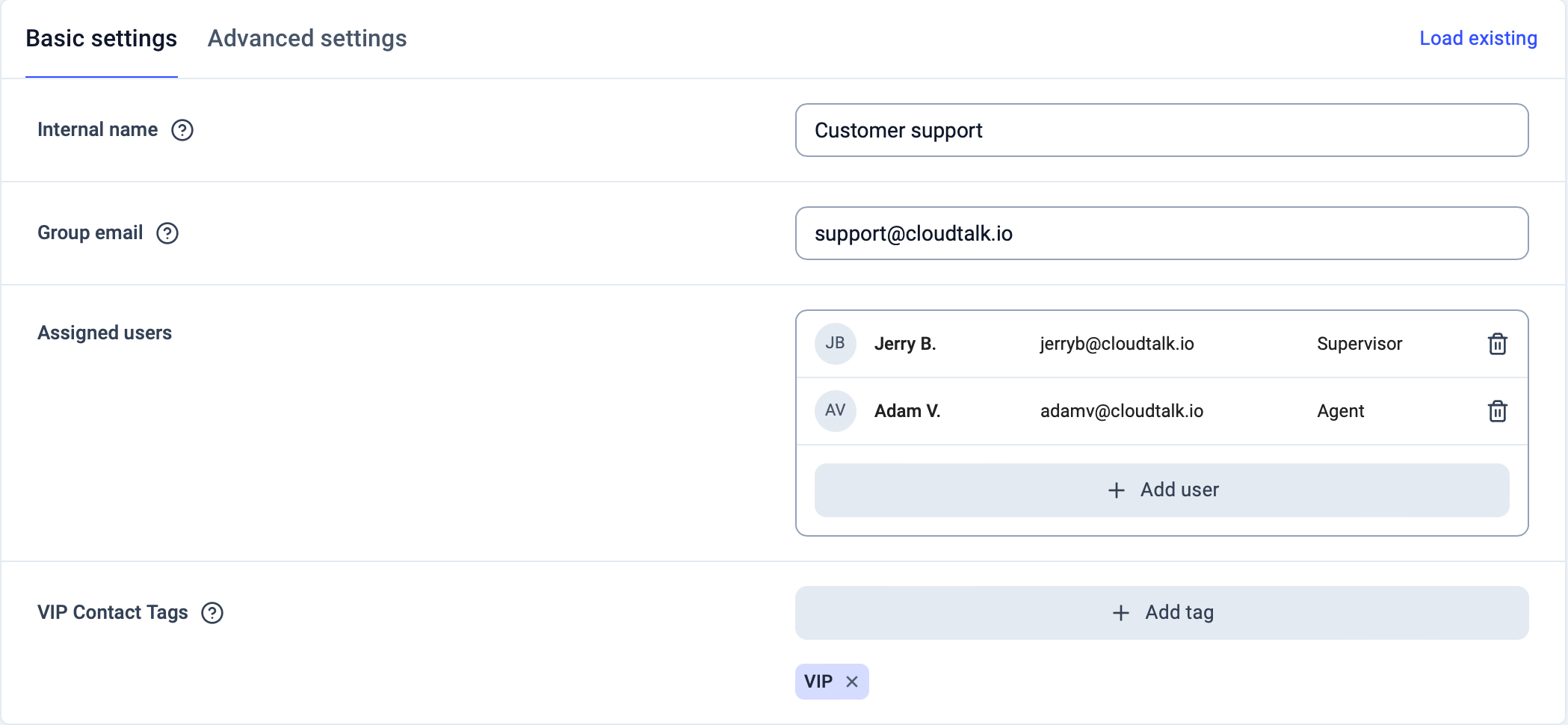
Assigned Users
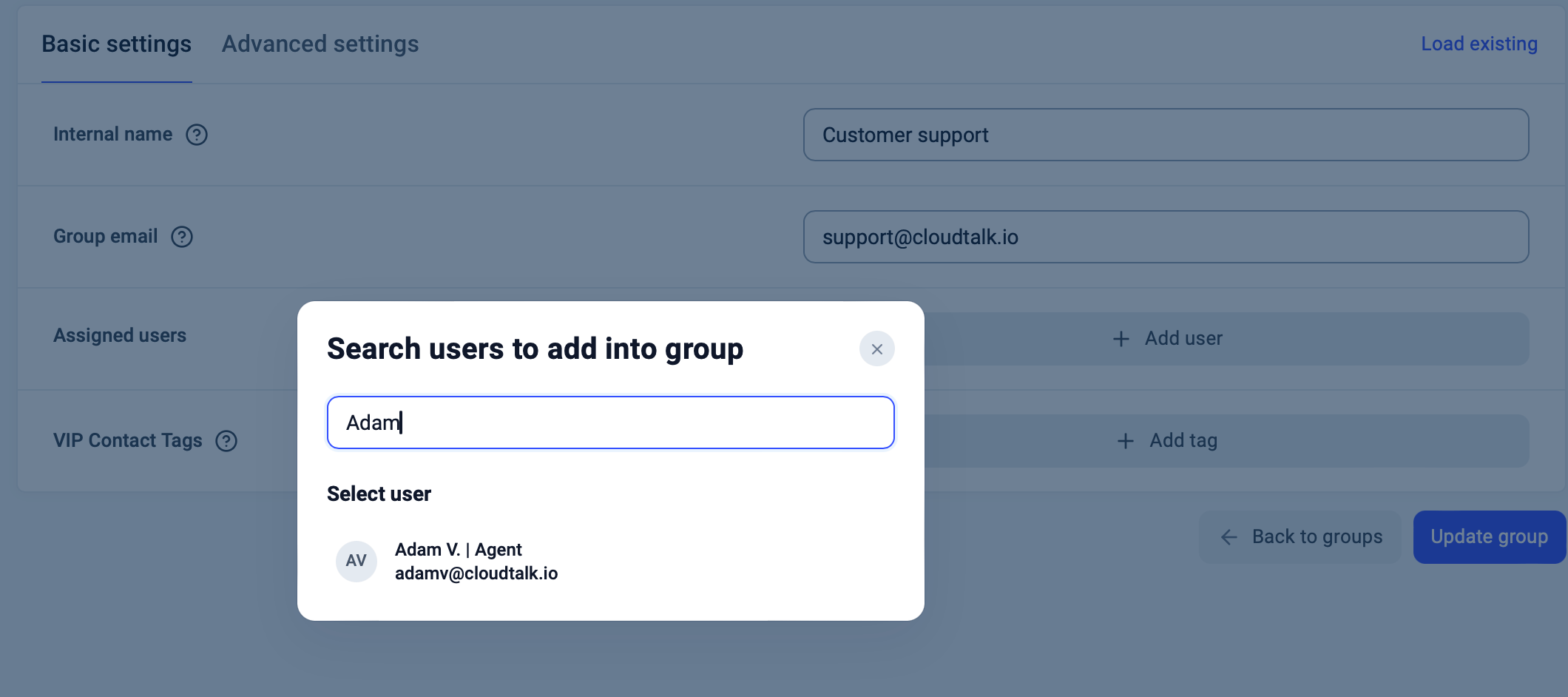
This section allows you to add specific users who should belong to the Group. The number of users assigned to a Group does not matter. You can add as many users as you wish. A single user can also be a part of several Groups at the same time. To assign users to a Group, click on+ Add user . Start typing the name of the user you wish to add, and a list of matching users will appear. Select the appropriate user from the list.

VIP Contact Tags
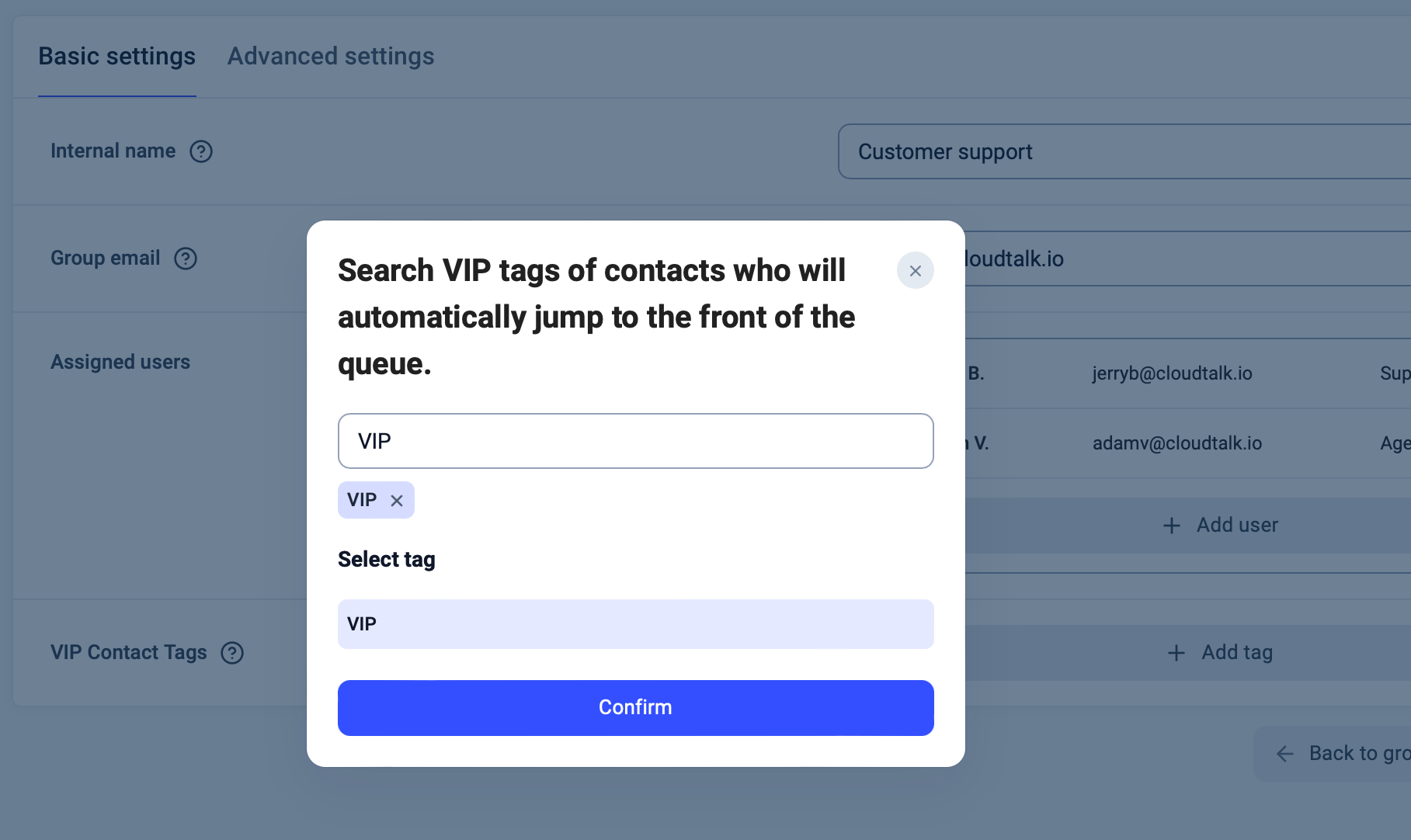
Here, you can decide which Contact Tags define a VIP customer for the specific Group. In order to add the tags, you need to assign specific tags to your VIP customer in the Contacts section.
- Go to Contacts > + Add Contact
- Fill in important information, such as name, email, company and tags (if necessary).
- Scroll down and click on Create Contact.
Advanced settings
Your ringing strategy
CloudTalk allows you to select a ring strategy for your groups. Inbound calls may be distributed among the group’s agents in three different ways:- Ring All: The call will ring to all agents until one of them answers.
- Round Robin: The call will ring to a chosen agent only. If the agent doesn’t answer, CloudTalk will choose the next agent in line, until the call is answered. This strategy cannot be used in combination with the Mobile App.
- Random: The call rings to a random agent within the queue. This strategy also cannot currently be used in combination with the Mobile App.

-
Least Recent: Routes each new call to the agent who has gone the longest without answering one within the same group. This strategy promotes fair distribution by prioritizing agents who have been idle the longest in this group, without considering their activity in other groups.
Note: The Least Recent strategy is currently not supported in the Mobile App.
Rule for caller entering a queue
This setting allows you to define when a caller is allowed to enter the queue. If a caller cannot meet the queue’s criteria, the call skips the queue and moves to the next step in the Call Flow. The available options are:- Always: All callers will enter the queue.
- At least one agent is logged in: Callers will enter the queue if at least one agent has a status “online”, “calling” or “idle”.
- At least one agent is present: Callers will enter the queue if at least one agent is in status “online” or “calling”.
- At least one agent is available to take a call: Callers will enter the queue if at least one agent is in a status “online”.
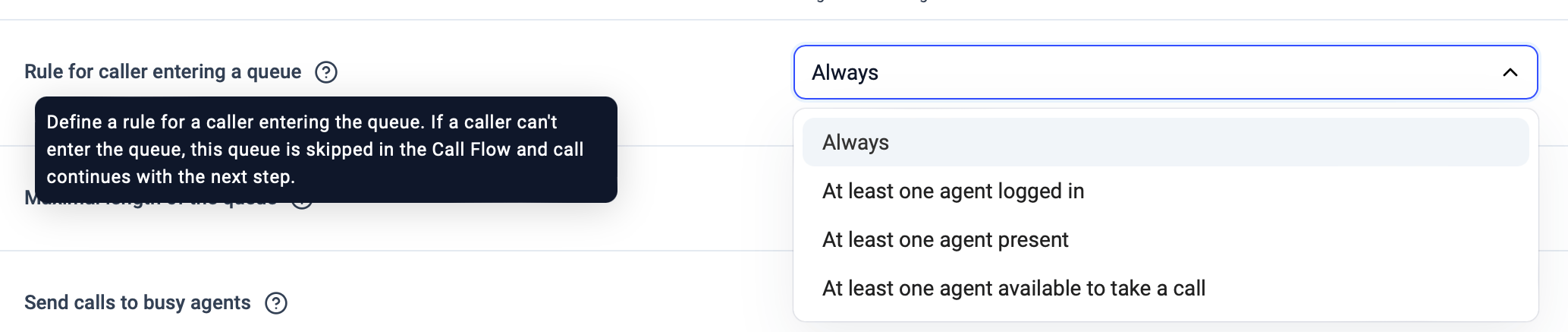
This setting is especially helpful if you do not want your customers to wait in a queue while there is a low chance that the call will be picked up within a given time.
Send Calls to Busy Agents
This option determines whether agents who are currently on another call (busy) or idle should still receive new call notifications.Skill-Based Routing
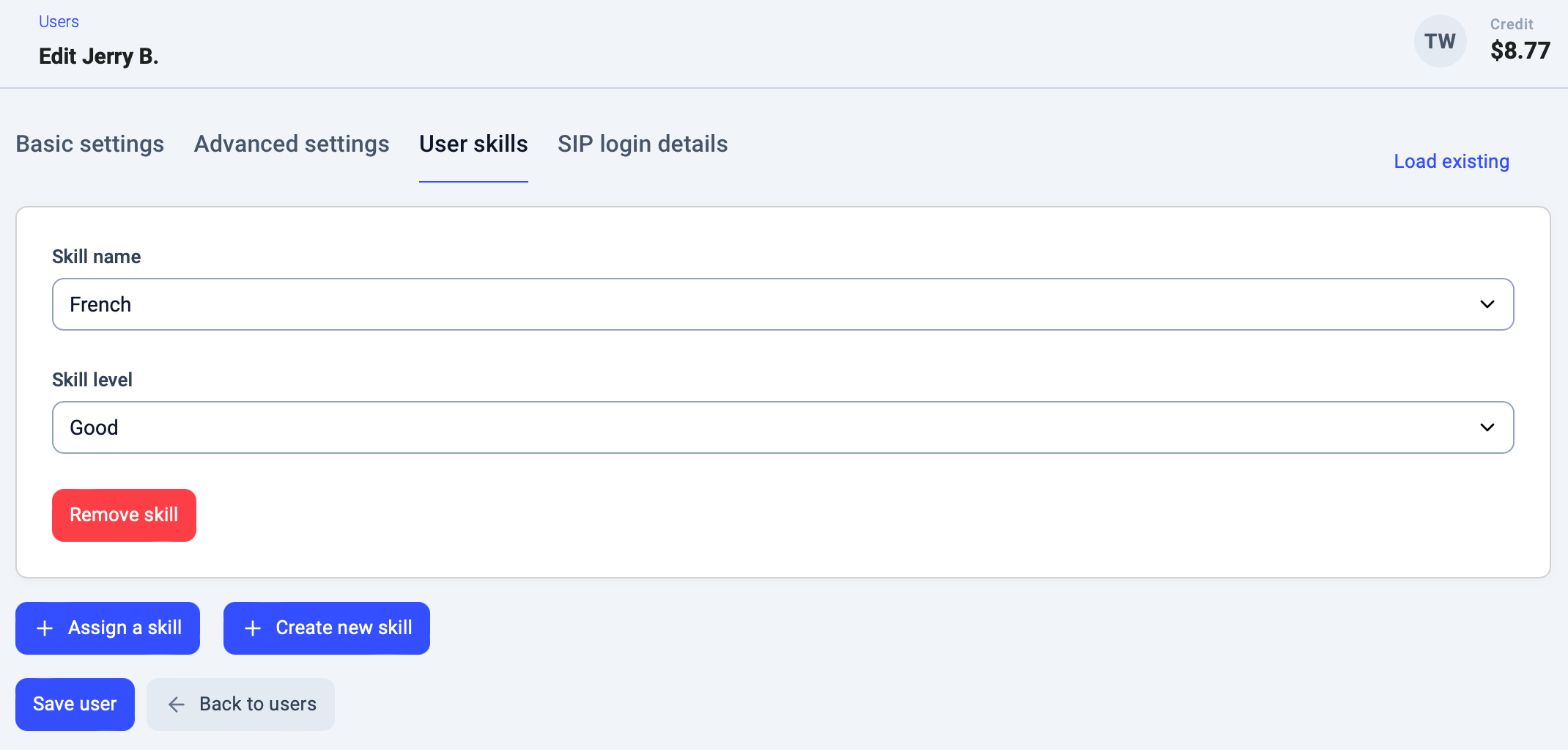
If you enable Assign a skill for Skill-Based Routing, calls will be distributed based on agent skill level. You can define skills for users under Dashboard > Settings > Skill Based Routing, then assign them by going to Users > Edit (pencil icon) > User Skills. Once done, click Save User to apply the changes.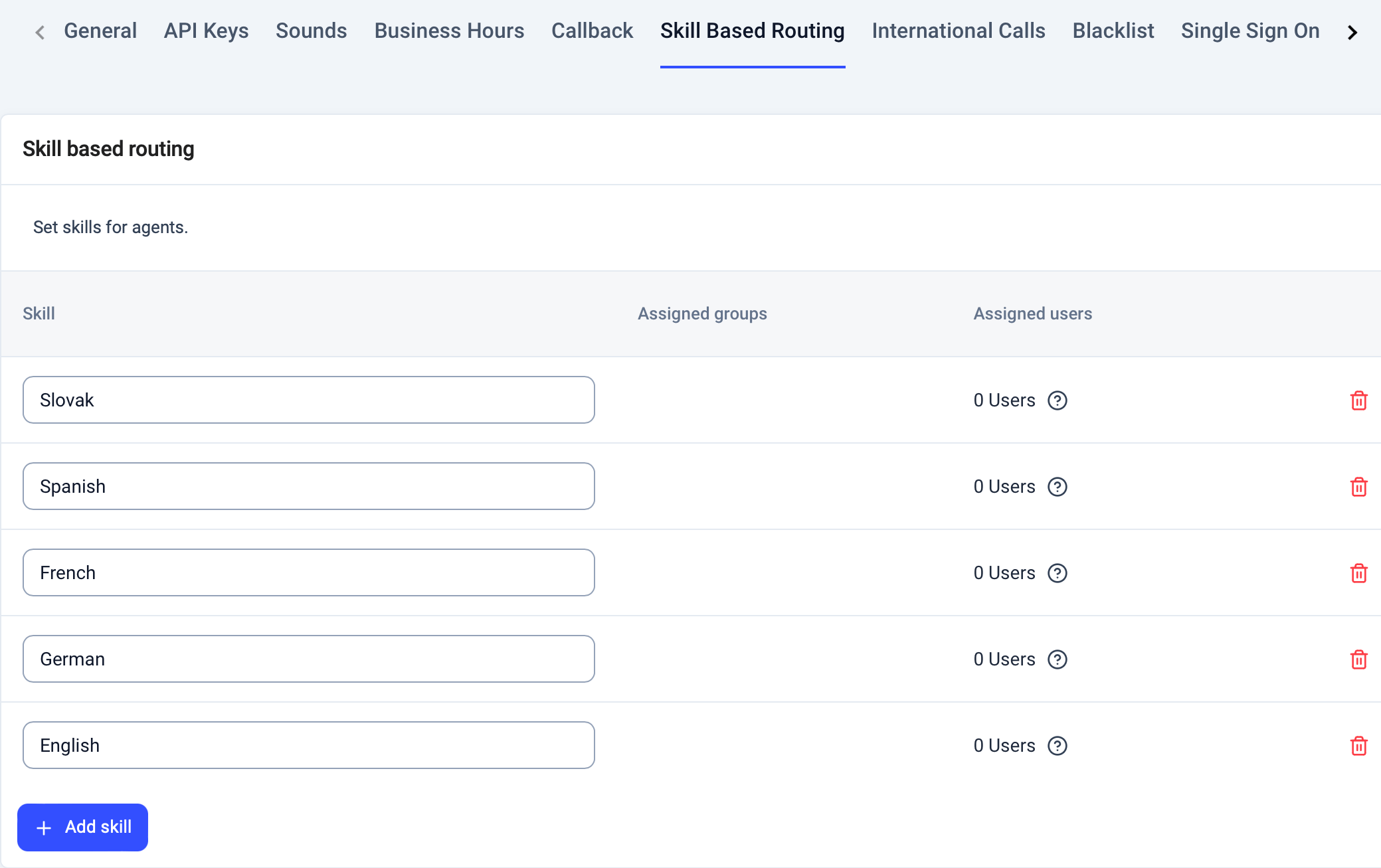
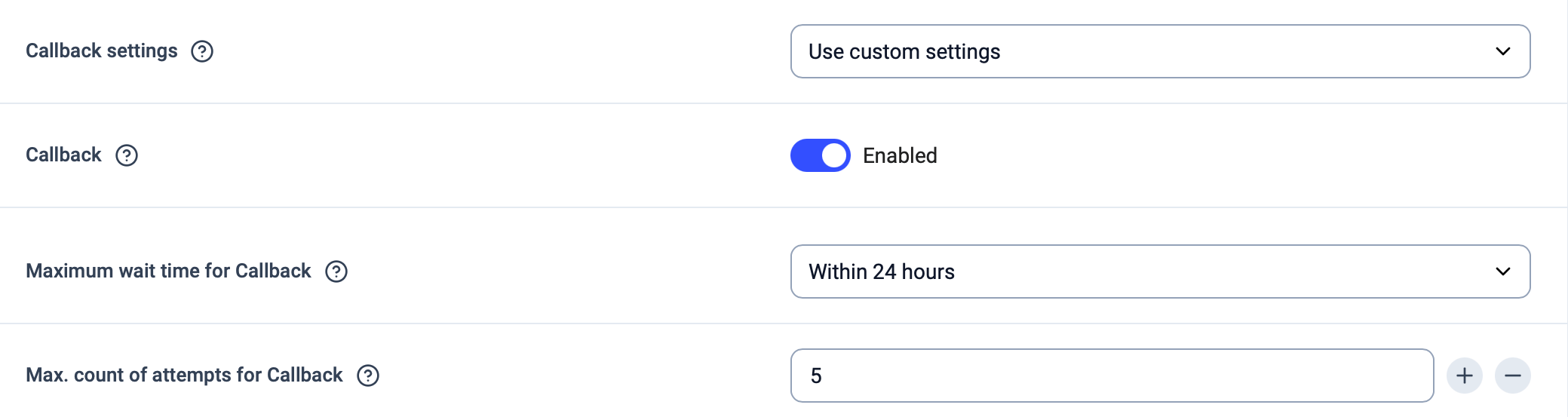
Callback settings
Callback feature ensures no missed connections by automatically redialing clients who were unable to reach you during their initial attempt. You can apply company-wide callback settings (located under Settings > Callback) or create customized settings tailored to specific needs. If you wish to configure custom callback settings, you can adjust the Maximum Wait Time for Callback and the Maximum Number of Callback Attempts.- Maximum wait time for Callback determines the maximum time span between a missed call and the next callback attempt. Options include: within 24 hours, within 48 hours, or by the end of the day.
- Max. count of attempts for Callback specifies how many times the system will attempt to reconnect if previous attempts fail. The recommended optimal value is 5.
Sounds
Waiting message
You are able to choose the music that your customers will hear while waiting in a queue. Decide between our predefined waiting music or upload your own.
Periodic announcement
Periodic announcements are what callers hear while waiting on the line. You can decide to play a message for them periodically, to ask for their patience and to remind them that agents are doing everything they can in order answer the call as soon as possible. For example, a message stating, “Thank you for holding, your call is important to us” can be played approximately every 40-60 seconds. If you select default ringing as the waiting message, then this feature will be disabled.
Queue Language
Pre-recorded messages and automated system messages callers hear while waiting in a queue, including periodic announcements and queue position updates, are now available in 16 languages instead of defaulting to English only. Supported languages: English (US), English (GB), German, French, Spanish, Portuguese (PT), Portuguese (BR), Czech, Slovak, Italian, Swedish, Finnish, Dutch, Polish, Norwegian, Danish.Note: This feature is not yet self-serve. To enable a specific language for your ring group, please contact our Support portal.
Need help or have a question? Just reach out through our Support portal — we’re here for you.