

Why should you use Okta SSO?Consistently ranking among leading identity and access management (IAM) providers, Okta can provide both security and ease of use through its SSO functionality. Setting up Okta SSO through the Dashboard will allow CloudTalk admin users to continue streamlined administration tasks, better control of user privileges, and the provision of an equally accessible and secure way for employees to launch their CloudTalk applications.
Set Up Okta SSO on your Dashboard
In order to ensure a proper setup process, please make sure you have the following:- Admin privileges for a CloudTalk account
- Admin privileges for an Okta developer account
Steps for CloudTalk Dashboard
-
Settings for SSO must be adjusted by an admin through the Dashboard. From the left sidebar, click into Account -> Settings. By choosing the Single Sign-on header, you will be able to see available options for SSO in the form of toggle buttons.

-
Admins can toggle On/Off to enable or enforce:
- Google SSO
- Azure SSO
- Okta SSO
- Keycloak SSO
- Onelogin SSO
Click the toggle button to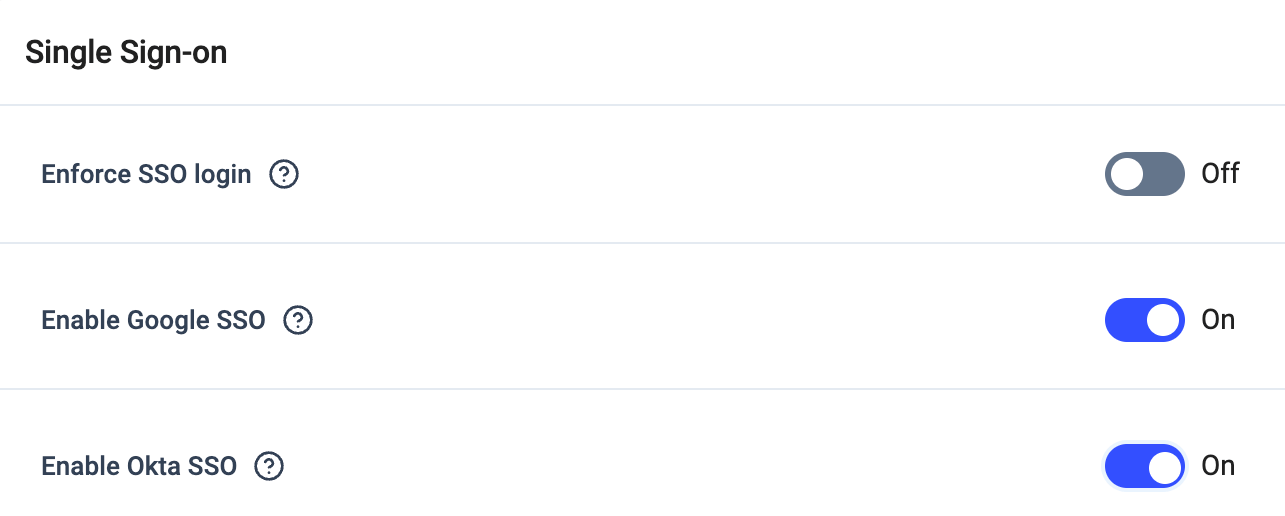
Enable Okta SSO. -
Once Okta SSO has been enabled, admin will be asked to fill in the following values:
- Client ID
- Client Secret
-
Discovery URL (sometimes called a “Resource/Issuer URL”)
- Method (GET or POST)

-
Additionally, it will be necessary to input a “redirect URI” into an appropriate field on the interface of the respective identity provider—in this case, Okta. In the following steps, users will be required to login to their Okta developer account from a separate tab in order to obtain the above value references and to input the redirect URI, which is necessary for authorization to work properly.
Steps for Okta Developer Portal
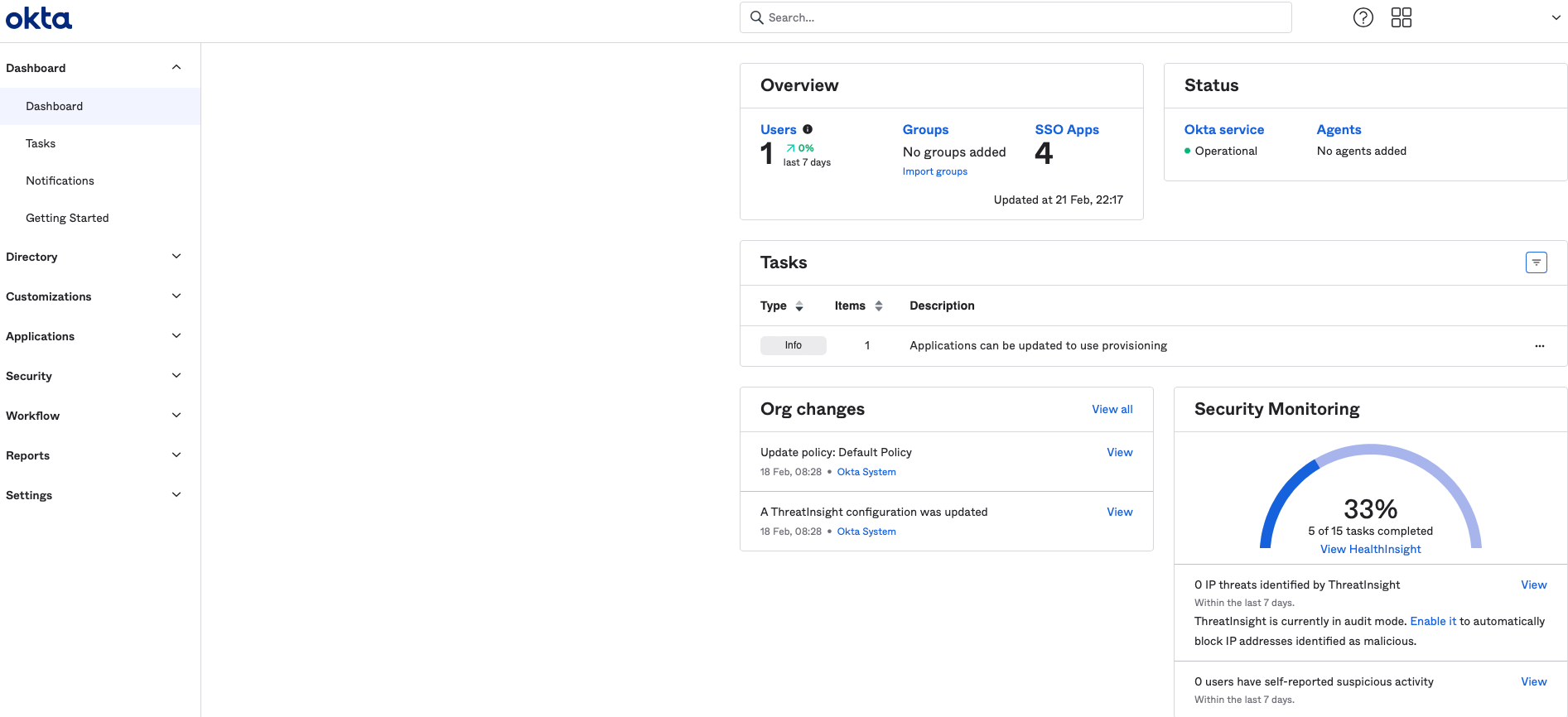
-
Okta-dev users who already have an established application running on OpenId protocol may be able to skip to steps 4-8 for inputing the redirect URI to their existing app and obtaining necessary values. If no OpenId protocol application has yet been created, we will need to make a new one. This can be done by clicking the Applications->Applications tab from the left sidebar, then clicking to
Create App Integration.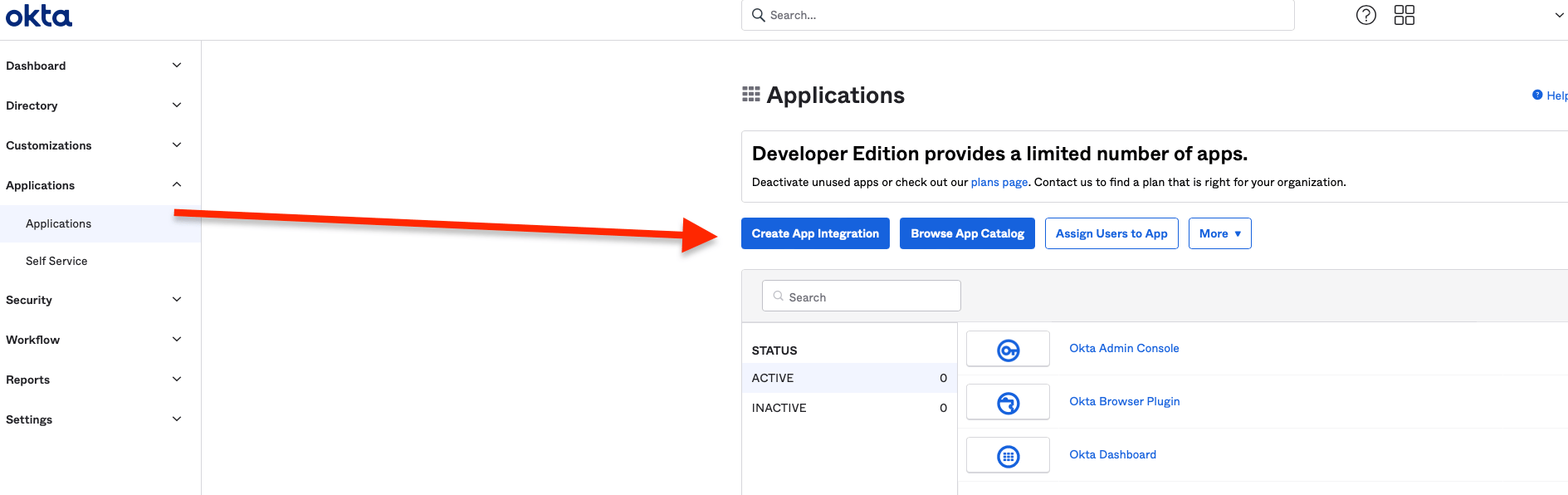
-
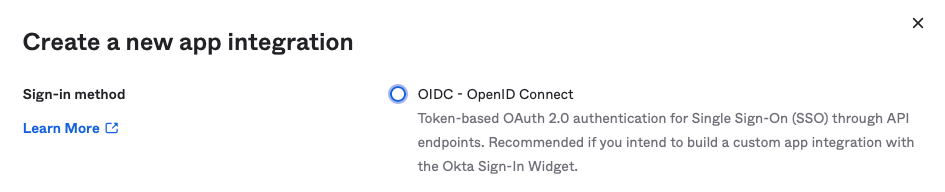
We will be presented with four choices of sign-in protocols, from which we should select the first option: OIDC - OpenID Connect.
-
For Application Type, we should choose Web Application and hit the
Nextbutton.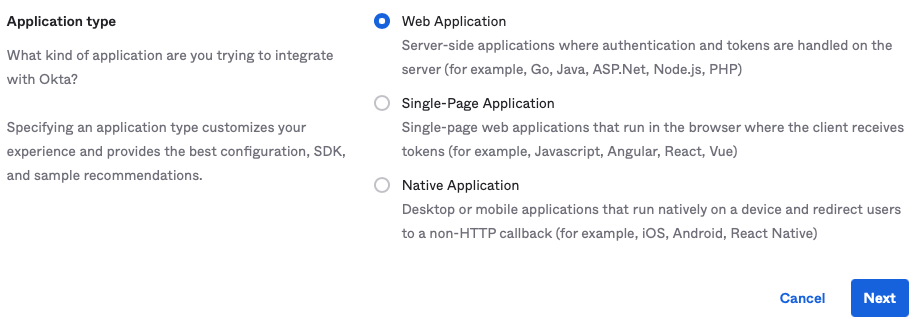
-
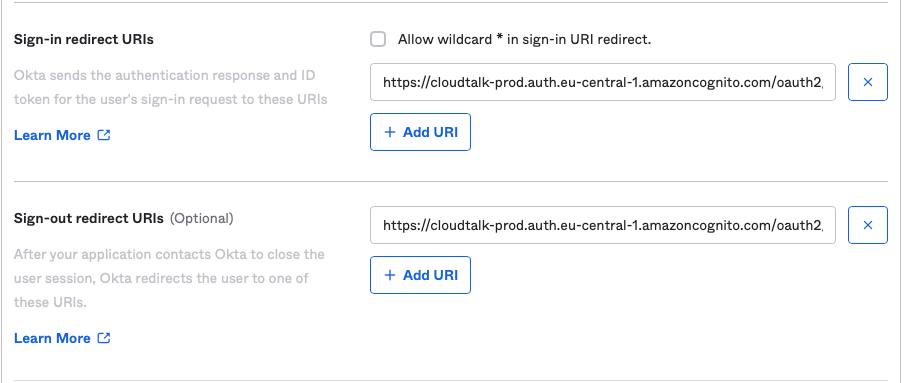
We can now change our App integration name and adjust other settings if desired. Two important settings we must change here are the Sign-in Redirect URIs and Sign-out Redirect URIs. In both of these boxes, we will enter the aforementioned Redirect URIs:
-
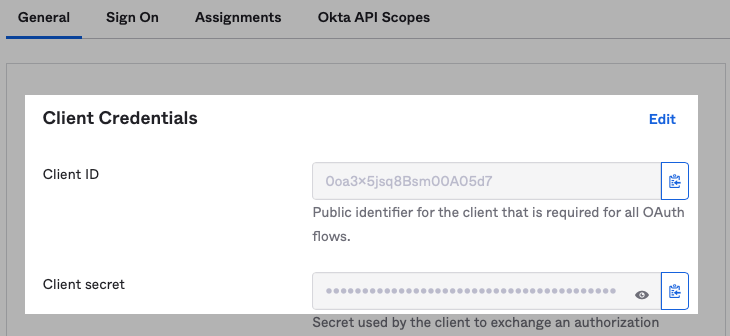
Once we have finalized the initial settings of our new app integration, we will be able to see the Client ID and Client Secret values. We can copy/paste these at any time from the Applications->Applications tab by clicking on the name of the application we created and looking under the General header.
-
Lastly, we need to copy or save a reference of the Okta domain for the admin account being used. This is located in the top right corner of the webpage, where there should be a dropdown arrow next to the
account username. Click the arrow to expand. The Okta domain is the line underneath the username, starting with “dev-”, containing a serial number in the middle, and ending with “.okta.com” .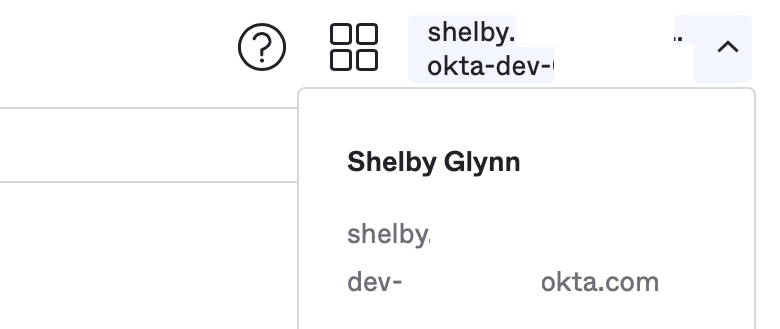
-
Having obtained the necessary values, we will switch back to our CloudTalk Dashboard tab to copy and paste the Client ID, Client Secret, and Discovery URL into their appropriate boxes. Remember to replace
{yourOktaDomain}with the real domain reference obtained in step 6 for the Discovery URL:https://{yourOktaDomain}.okta.com/ - For the method, GET should work. Try POST if not.
Enabling Okta SSO on CloudTalk Phone
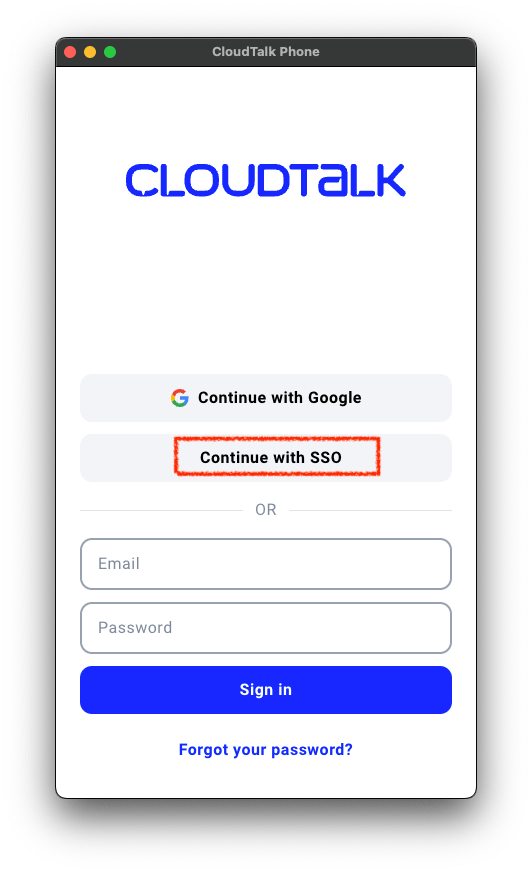
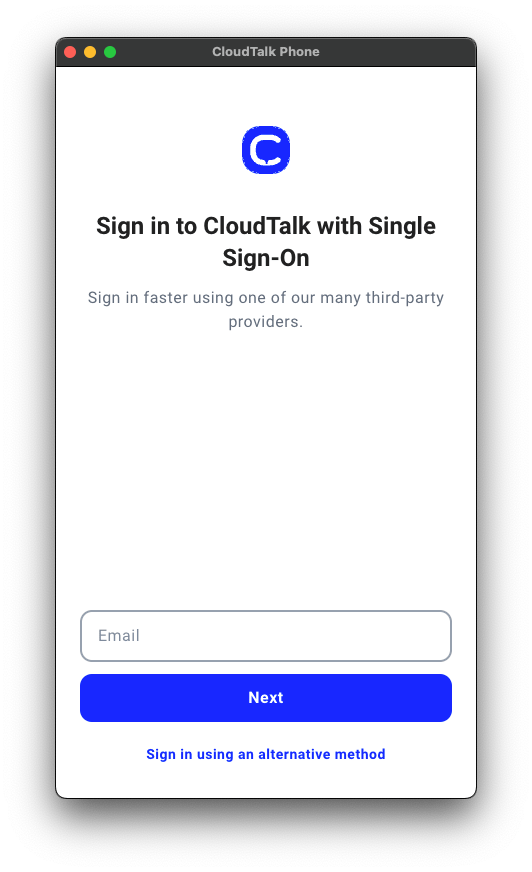
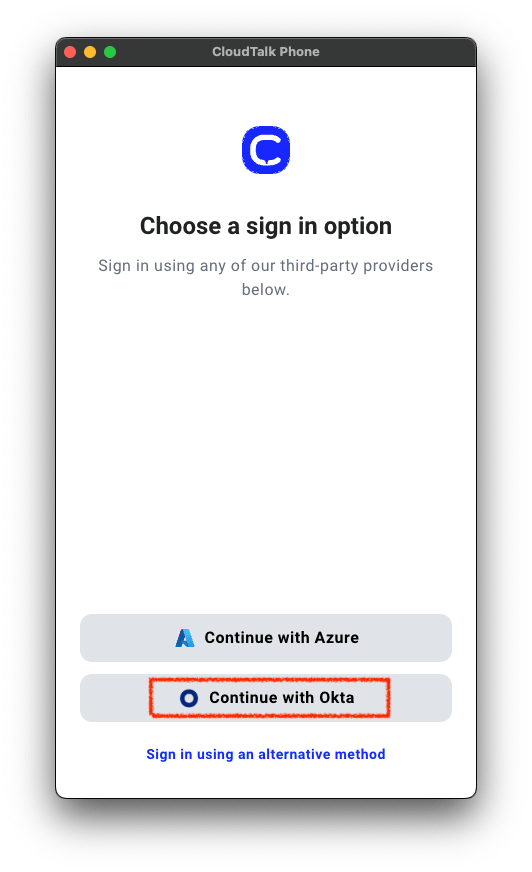
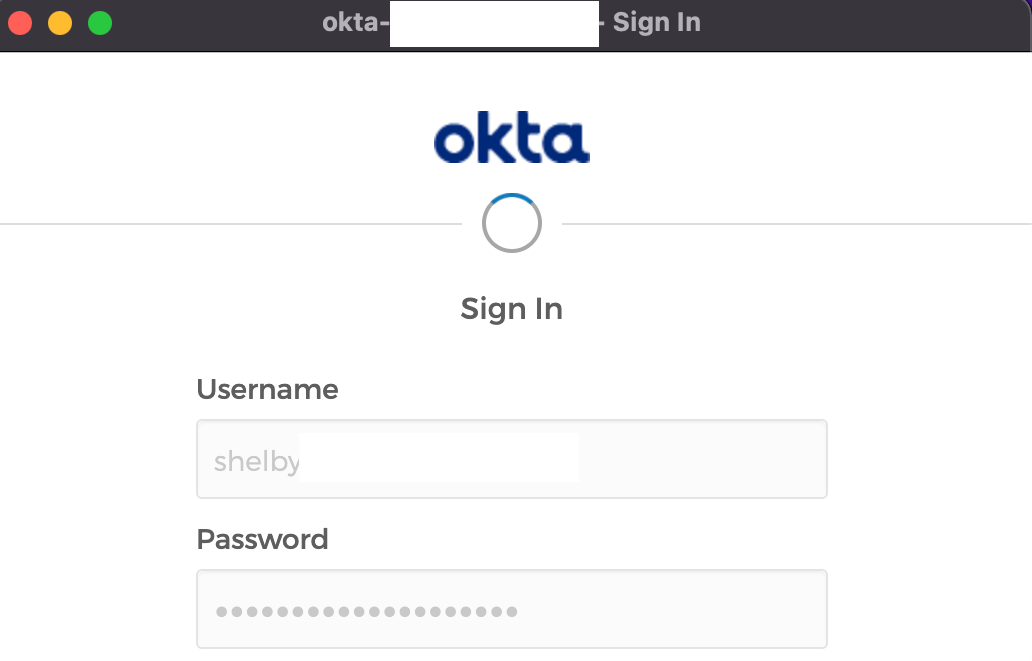
The settings chosen through the Dashboard will affect what users see on all CloudTalk login screens. When enabled, a button labeledContinue with SSO should be viewable on login screens.
Need help or have a question? Just reach out through our Support portal — we’re here for you.