

Call Transfer in CloudTalk allows agents to seamlessly redirect an ongoing call to another agent, team, department, or external number. This ensures that customers are always connected to the most appropriate person, improving resolution time and overall customer experience.This article provides an overview of the different types of Call Transfer available in the CloudTalk phone app and explains how each option works.
Call transfers are a crucial feature in any customer service environment, allowing businesses to route calls to the most appropriate agent or department for quicker resolutions. By offering seamless transfers, companies can minimize wait times and enhance the overall service experience for their customers.
How to Transfer a Call in CloudTalk
-
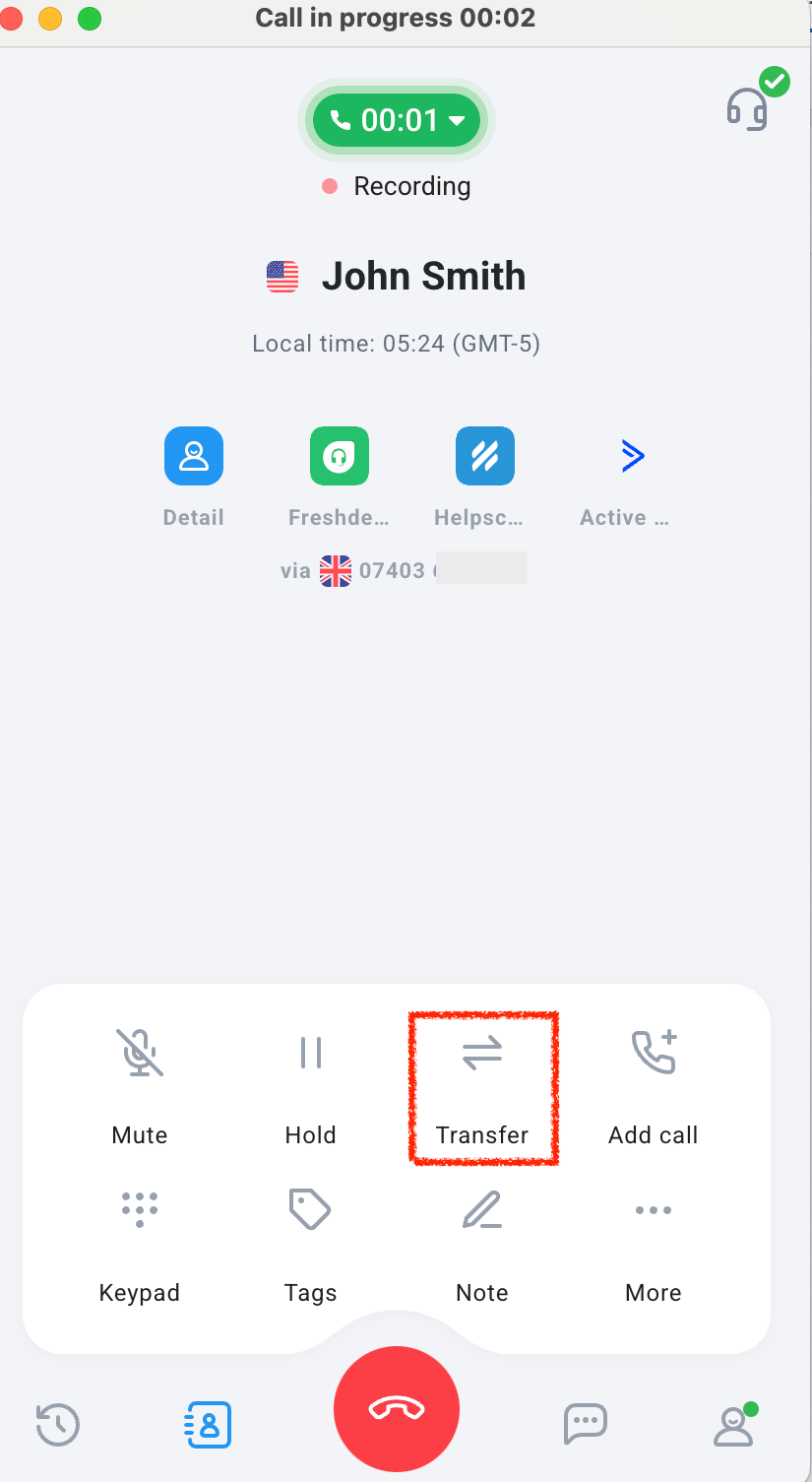
During an active call, open the on-call actions menu at the bottom of the CloudTalk Phone app and click the Transfer icon.
-
A transfer menu will appear with two tabs:
- Internal Contacts – teammates, individual agents, or groups within your company
- External Contacts – saved external numbers
Switch to the External tab if you want to transfer the call to an external contact.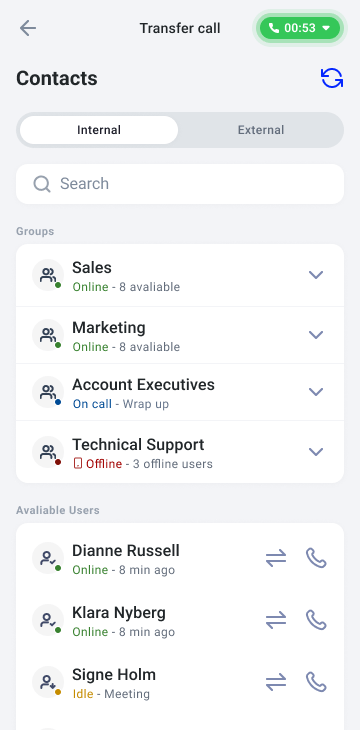
-
Select a group, an agent or external contact from the list.
When selecting who to transfer the call to, CloudTalk automatically organizes the list to help you find the best available option.
- Available users (Online or Ready) appear at the top
- Users who are Busy or already in a call appear below
- Users who are offline or otherwise unavailable to receive calls are hidden
-
Choose what type of transfer you want to proceed with
- Transfer To action button initiates a Cold transfer.
- Talk To action button (desktop phone only) initiates Warm transfer.
-
If transferring to an external contact:
- If the contact has multiple phone numbers, select the number you want to transfer a call to.
- If the contact has only one phone number, the transfer starts immediately.
- Follow the on-screen steps based on the selected transfer type to complete the process.
Warm Transfer
A Warm Transfer allows you to speak privately with another agent, enter the group queue or external contact before completing the transfer. This ensures you can provide context, confirm availability, and deliver a smooth handoff for the caller. Warm transfers are ideal when you need to explain the situation, share important details, or confirm that the receiving party is ready to take over the call.How Warm Transfers Work
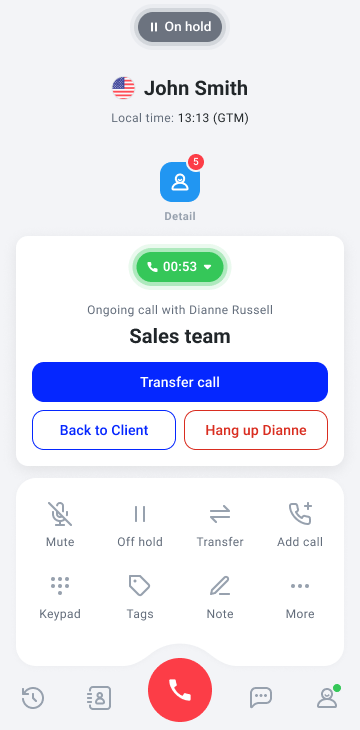
When you initiate a warm transfer:- The caller is automatically placed on hold
- You are connected privately to the selected agent, external contact or enter group queue
- The system clearly indicates that you are in a private conversation
- The call is transferred only after you confirm the action
-
Transfer the call
- Completes the transfer and connects the caller to the new agent by pressing “Transfer call”
-
Return to the caller
- Ends the private conversation and resumes the original call by pressing “Back to Client”
-
Cancel the transfer attempt
- Disconnects the private conversation without affecting the caller by pressing “Hang up connected <Agent Name>”
If the Warm Transfer Is Not Answered
If the selected agent, external contact or group does not answer:- You remain connected with the caller
- The call stays under your control
- You can retry the transfer or continue assisting the caller
Cold Transfer
A Cold Transfer passes the call directly to another agent, group, or external contact without a private conversation beforehand. Cold transfers are best suited for straightforward situations where no additional context needs to be shared before handing off the call.Safe Transfer Mode
Safe Transfer mode is a protected version of a cold transfer that prevents calls from being dropped during transfer. When enabled, the original agent remains connected to the caller while the system attempts to connect the selected agent, external contact or group. The call is only completed once the transfer is successful. If the transfer attempt is unsuccessful, the call stays with the original agent. The agent can then continue assisting the caller or retry the transfer.Changing Safe Transfer Mode
Safe Transfer Mode is enabled by default for all accounts. Admins can manage this setting in CloudTalk Dashboard → Account → Settings → General -> Call Transfer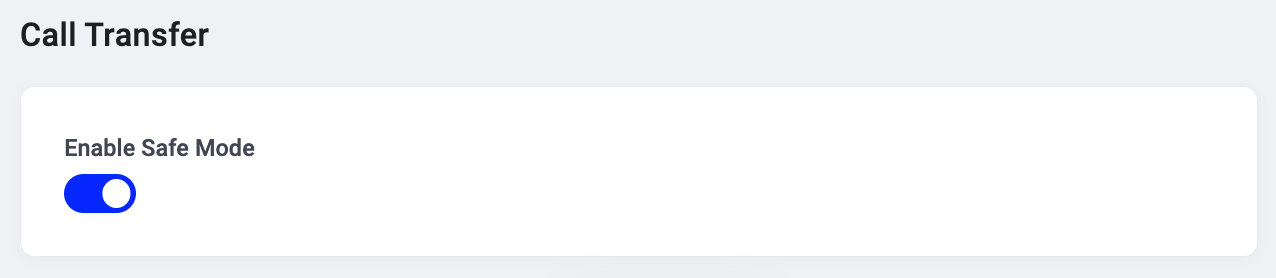
What You See During a Cold Transfer
What happens after you initiate a Cold Transfer depends on whether Safe Transfer Mode is enabled on your account.Cold transfer without Safe Mode enabled
After call transfer is initiated and Safe Transfer Mode is not enabled on your account, your connection with the caller ends immediately. You are then redirected to the Summary screen to complete after-call tasks, such as adding tags, notes, or performing other available actions.Cold transfer with Safe Mode enabled
After call transfer is initiated and Safe Transfer Mode is enabled on your account:- A “Transferring…” status appears on your screen
- You remain connected to the caller while the system attempts to connect the selected agent, group or external contact
📖 What Is Considered a Successful Cold Transfer in Safe Mode?The definition of a successful transfer depends on the selected destination:
- Individual Agent - The transfer is successful when the selected agent accepts (answers) the call.
- Group - The transfer is successful when the call successfully enters the target group’s queue.
- External Number - The transfer is successful when the external number accepts (answers) the call.
If the Cold Transfer is not successful
Behavior for unsuccessful cold transfer depends on if the Safe mode is enabled on your account.Cold transfer without Safe Mode enabled
If a cold transfer fails and Safe Transfer Mode is disabled:- The call is disconnected
- The call does not return to the original agent
Cold transfer with Safe Mode enabled
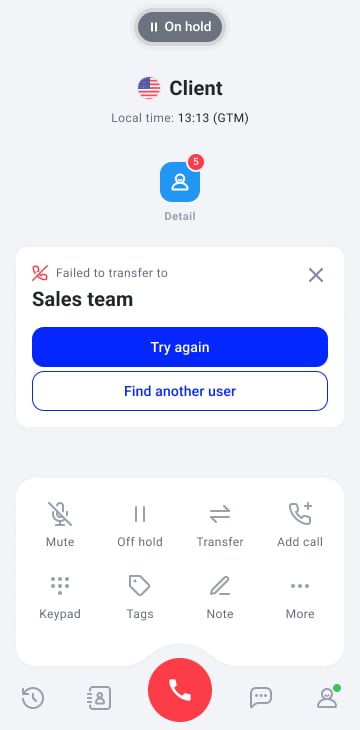
Safe Transfer Mode is designed to prevent silent call drops. If a cold transfer fails while Safe Mode is enabled:- The original agent remains connected to the caller
- The agent receives clear information that the transfer failed
- The agent can retry the transfer or continue assisting the caller
Need help or have a question? Just reach out through our Support portal — we’re here for you.