

Workflow Automations are designed to make the job of an agent easier by automating processes such as sending a follow-up text, transcribing certain calls, or automatically posting call summaries to Slack.A trigger is the first step in this automation process, the event which triggers_,_ or sets in motion, an automation.
Workflow Automations in CloudTalk start when a specific Trigger Object performs a defined Object Action. A trigger answers two questions:
- What object should be monitored?
- What event on that object should start the automation?
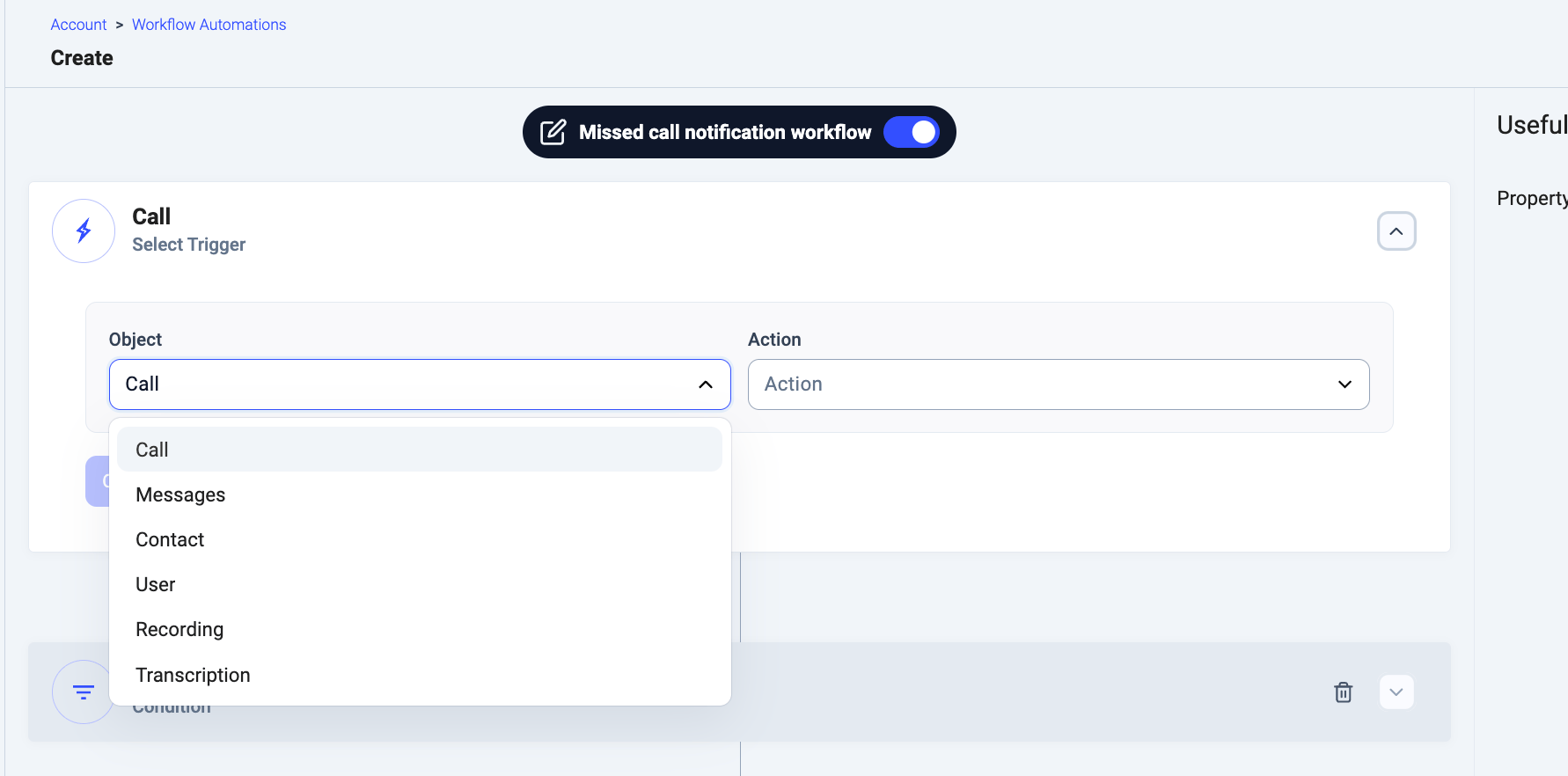
Call Triggers
Use Call triggers to start automations based on call activity.Call Object Attributes
When Call is selected as the trigger, call-related data attributes appear on the right side of the workflow builder. These can be used in conditions and action steps.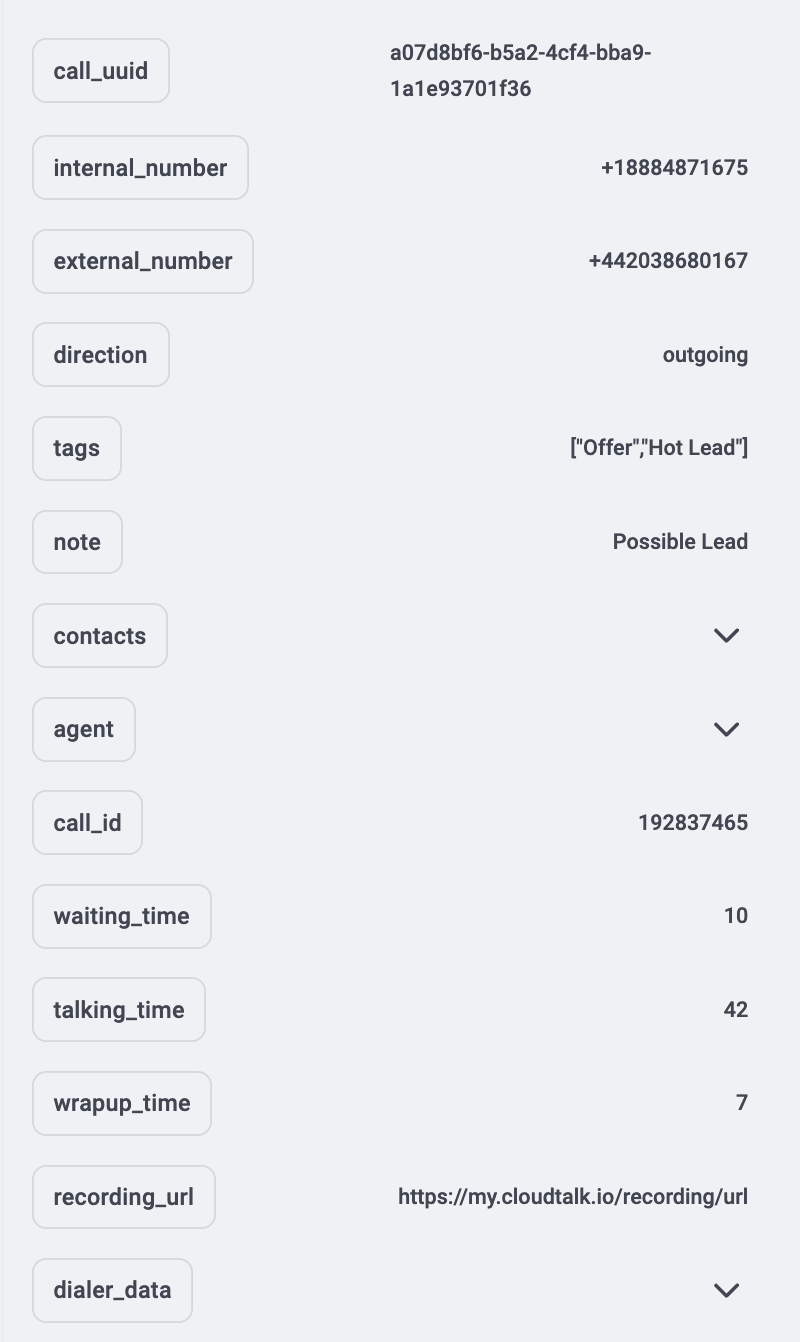
Conversation Intelligence Actions
Enabling the Conversation Intelligence package unlocks these additional actions:
These triggers deliver AI analysis results along with key call identifiers (
call_uuid and cdr_id). Standard call attributes, such as numbers, direction, tags, note, contacts, and agent, are not populated for these events. Each trigger fires once per call.
Message Triggers
Use Message triggers to automate workflows based on messaging activity.Message Object Attributes
After selecting Message as the trigger, message-related data attributes become available on the right side of the workflow builder. You can use these attributes in conditions and action steps.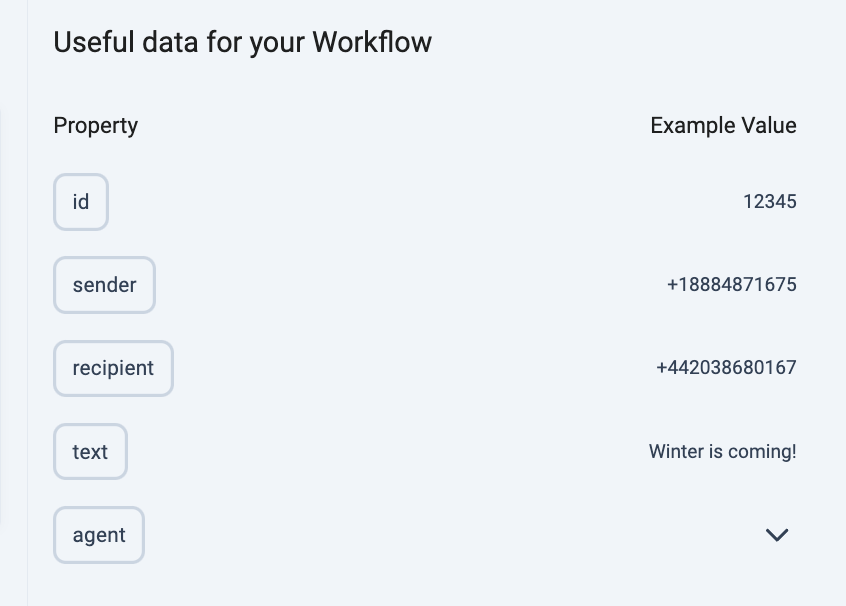
Contact Triggers
Use Contact triggers to automate workflows related to your CloudTalk contact list.Contact Object Attributes
After selecting Contact as the trigger, contact-related data attributes become available on the right side of the workflow builder. You can use these attributes in conditions and action steps.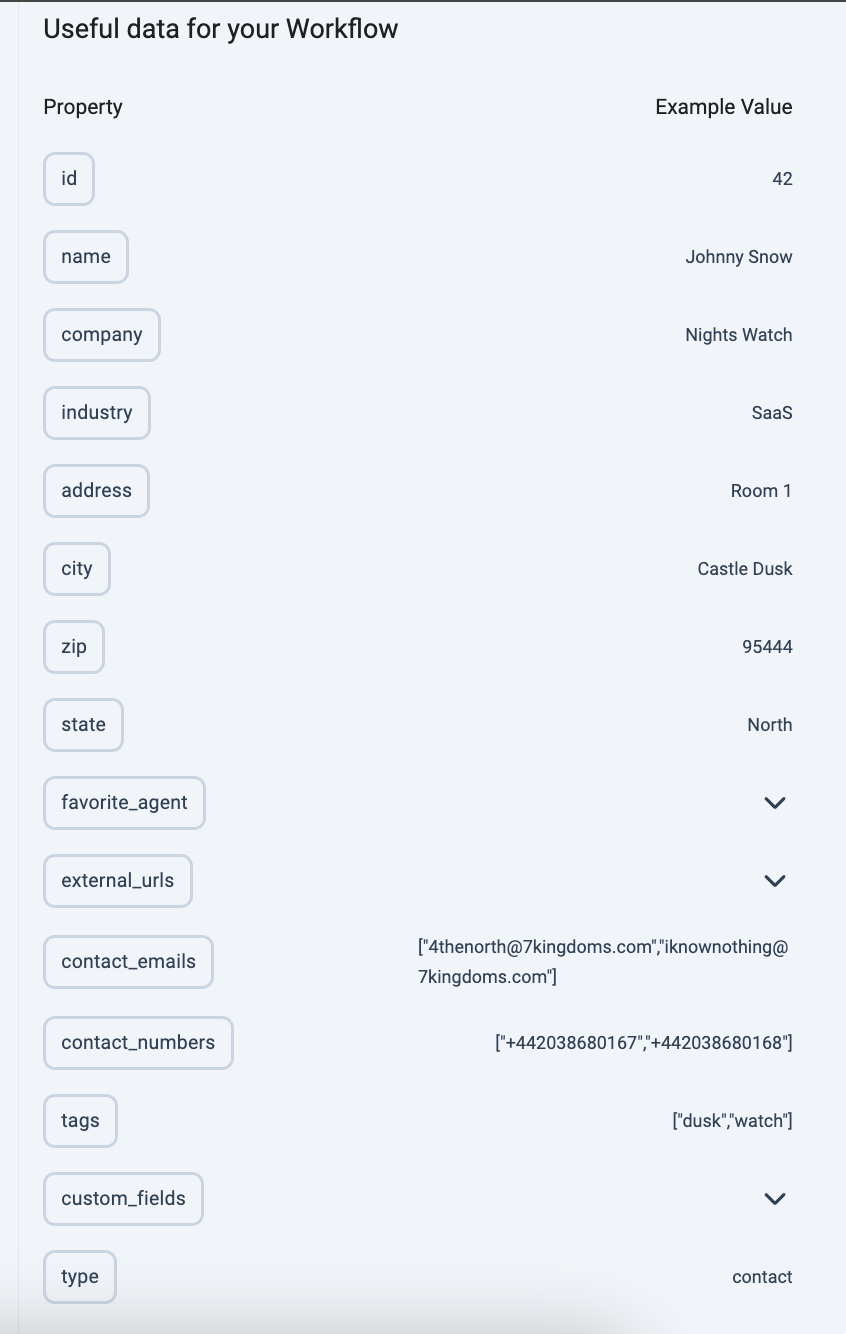
User Triggers
Use User triggers to automate workflows related to CloudTalk users and agents.Status Changed
The Status Changed trigger activates when:- an agent manually changes their status in the CloudTalk app (Online, Offline, Idle)
- an agent logs in (status changes to Online)
- an agent logs out using the Log out button (status changes to Offline)
User Object Attributes
After selecting User as the trigger, user-related data attributes become available on the right side of the workflow builder and can be used in conditions and action steps.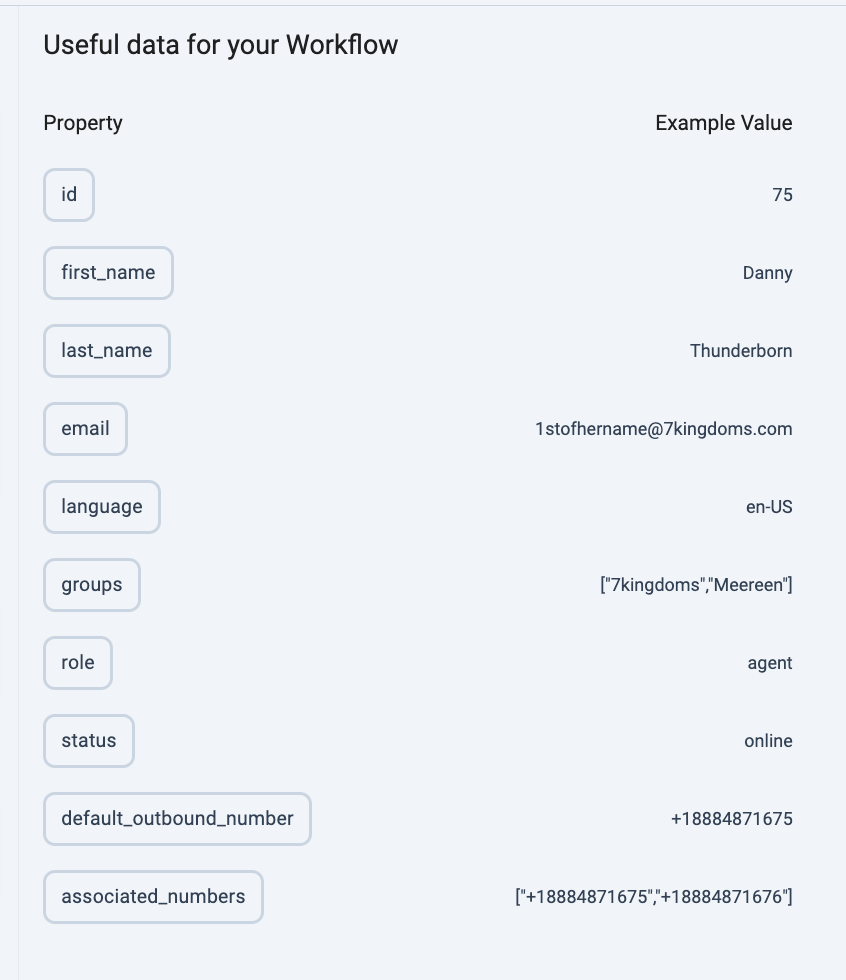
Recording Triggers
Use Recording triggers to automate workflows based on call recordings.Recording Object Attributes
After selecting Recording as the trigger, recording-related data attributes become available on the right side of the workflow builder. You can use these attributes in conditions and action steps.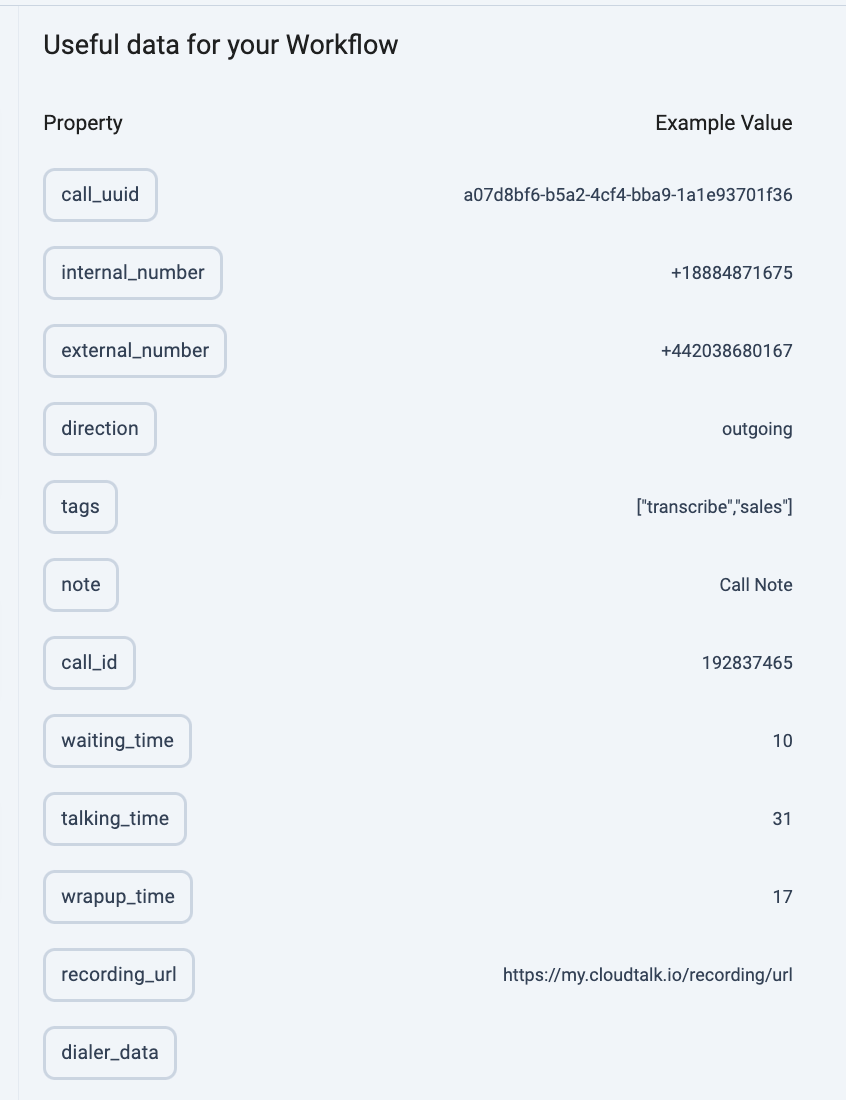
Transcription Triggers (legacy)
Use Transcription triggers to automate workflows based on call transcriptions. Your Workflow Automation will be triggered when a new transcription has been successfully created for a given recording.Transcription Object Attributes
After selecting Transcription as the trigger, transcription-related data attributes become available on the right side of the workflow builder and can be used in conditions and action steps.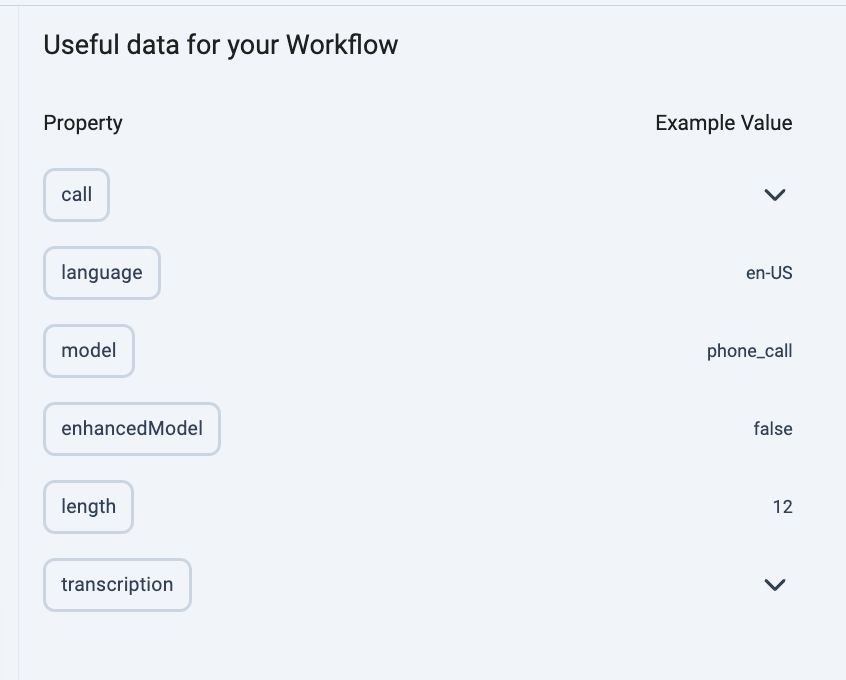
VoiceAgent Analysis Triggers
Use Voice Agent Analysis triggers to automate workflows based on the post-call analysis of a Voice Agent call.VoiceAgent Analysis Object Attributes
When you select the Voice Agent Analysis trigger, the following data attributes become available for use in your workflow: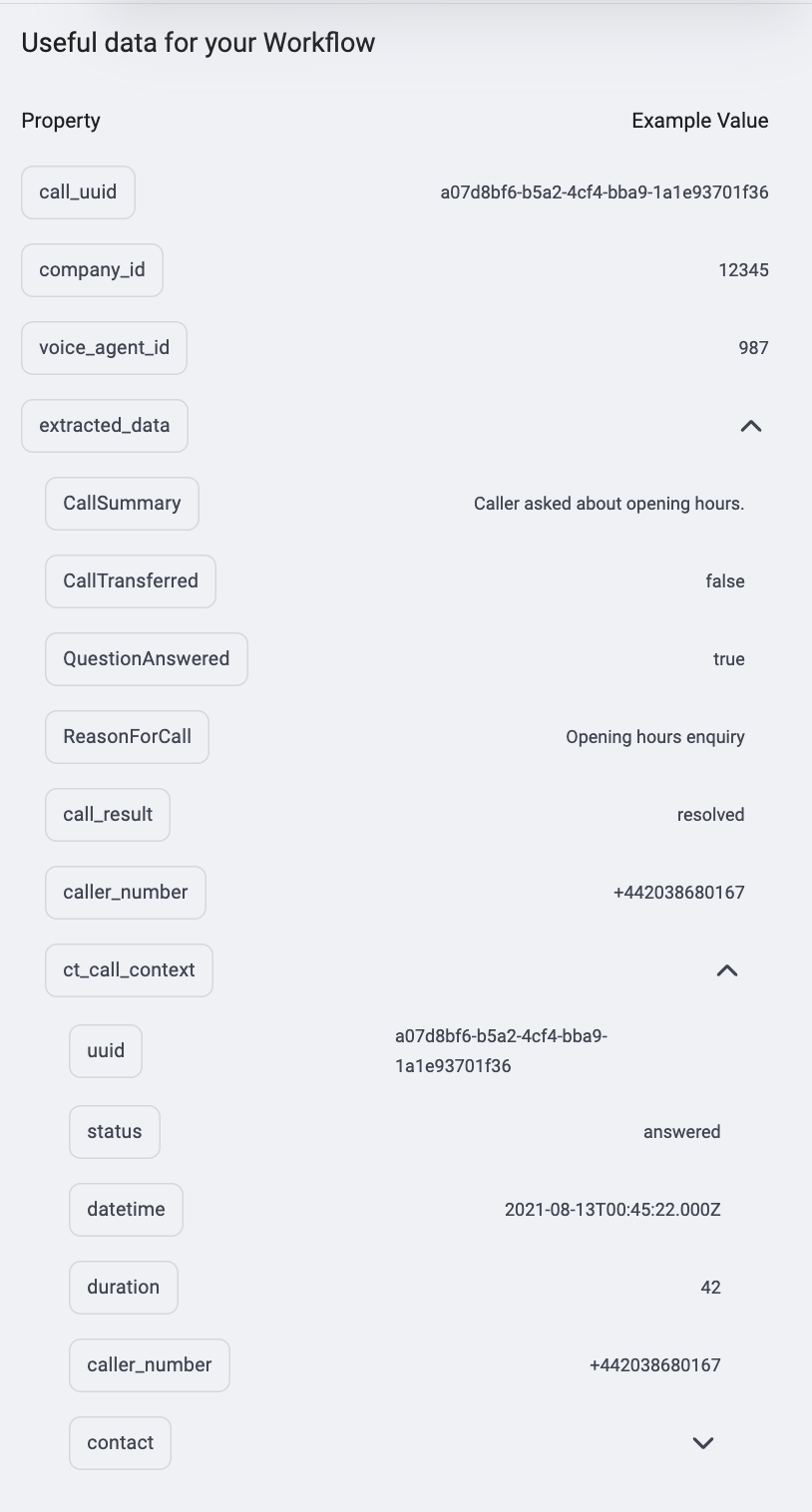
extracted_data object.
To reference them in your workflow, use dot notation:
#{{ event.properties.extracted_data.[custom_property_name] }}
Example: If your Extract Information skill includes a custom property named longDescription, reference it in your workflow as:
#{{ event.properties.extracted_data.longDescription }}
Need help or have a question? Just reach out through our Support portal — we’re here for you.