

This article explains how to connect Zendesk with CloudTalk, configure advanced call export rules, and install the CloudTalk CTI so your team can call directly from Zendesk.
Watch how it works
To see the CloudTalk + Zendesk integration in action, watch this short overview:Before You Start
Make sure you have the following:- An active CloudTalk account with Admin access
- An active Zendesk Support account with Admin permissions
- Access to Settings > Integrations in CloudTalk
- Permission to install apps from the Zendesk Marketplace
- Permission to manage API integrations in Zendesk
Integration Overview
You can set up your Zendesk integration in three ways:- Only the data integration / synchronization
- Only the CTI
- Both (recommended)
Connect Zendesk to CloudTalk
- In the Dashboard go to Settings > Integrations in the left menu.
-
Hover over the Zendesk integration and click
+Add.
-
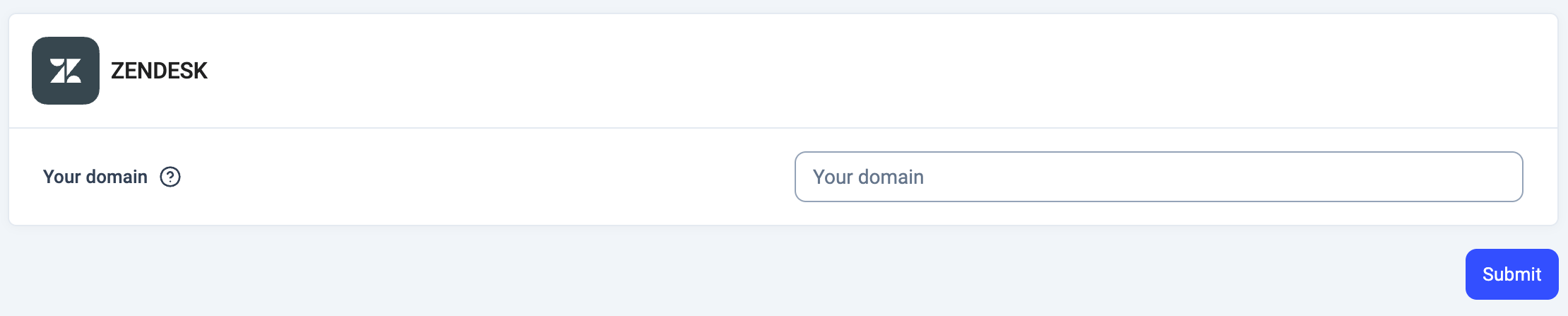
Enter your Zendesk domain.
-
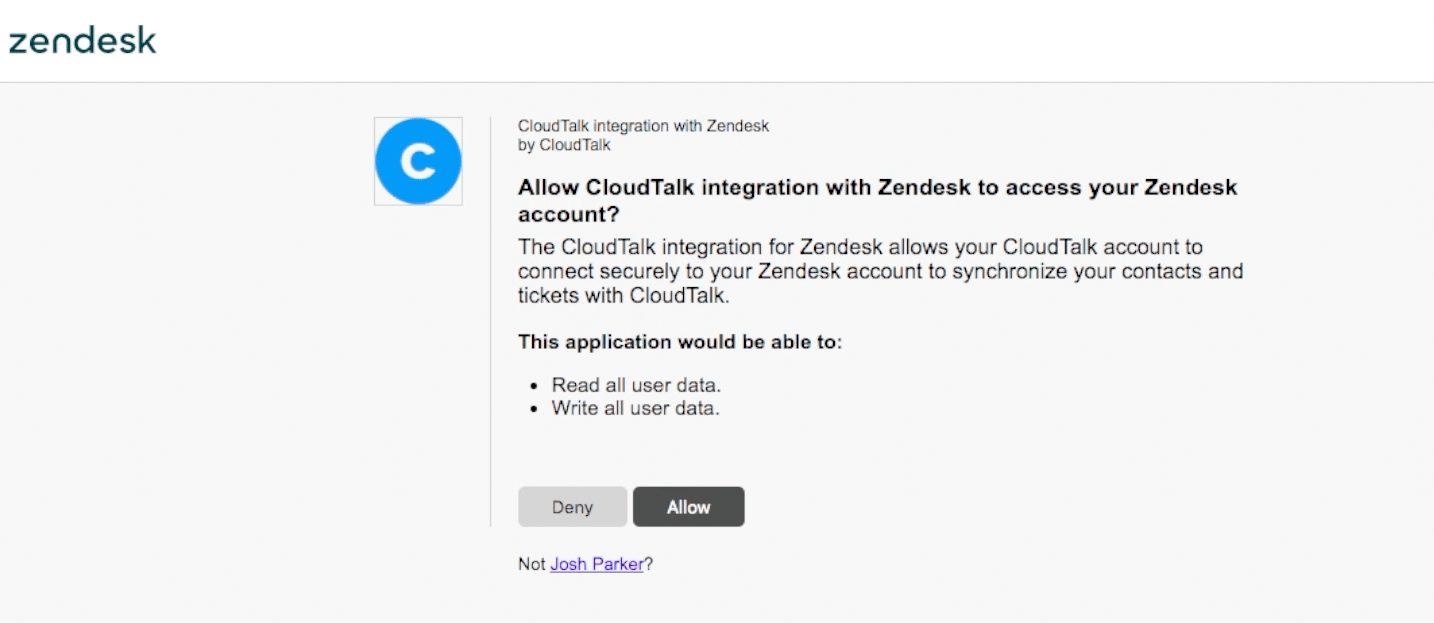
You will be redirected to a Zendesk login page to log into your account. Select Authorize and follow the authorization flow.
Integration Customization
After successful authorization, you will be redirected back to your CloudTalk dashboard, where you can configure how calls, contacts, tickets, SMS, and VoiceAgent data are exported to Zendesk. The integration settings are divided into the following sections:General Settings
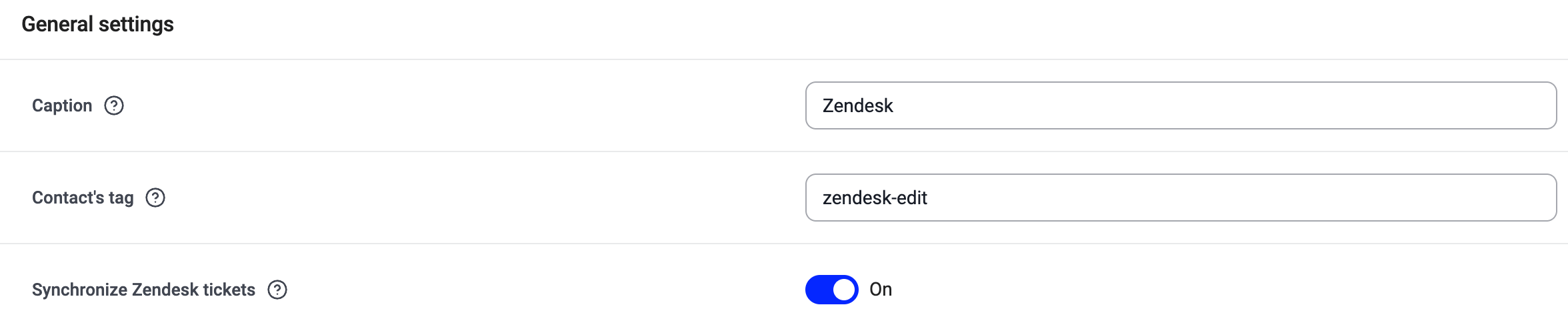
- Caption Customize the name of this integration instance
- Contact’s tag Define a tag that will automatically be added to contacts synchronized from Zendesk
- Synchronize Zendesk tickets Enable this option to activate ticket synchronization between Zendesk and CloudTalk.
Call Export Settings
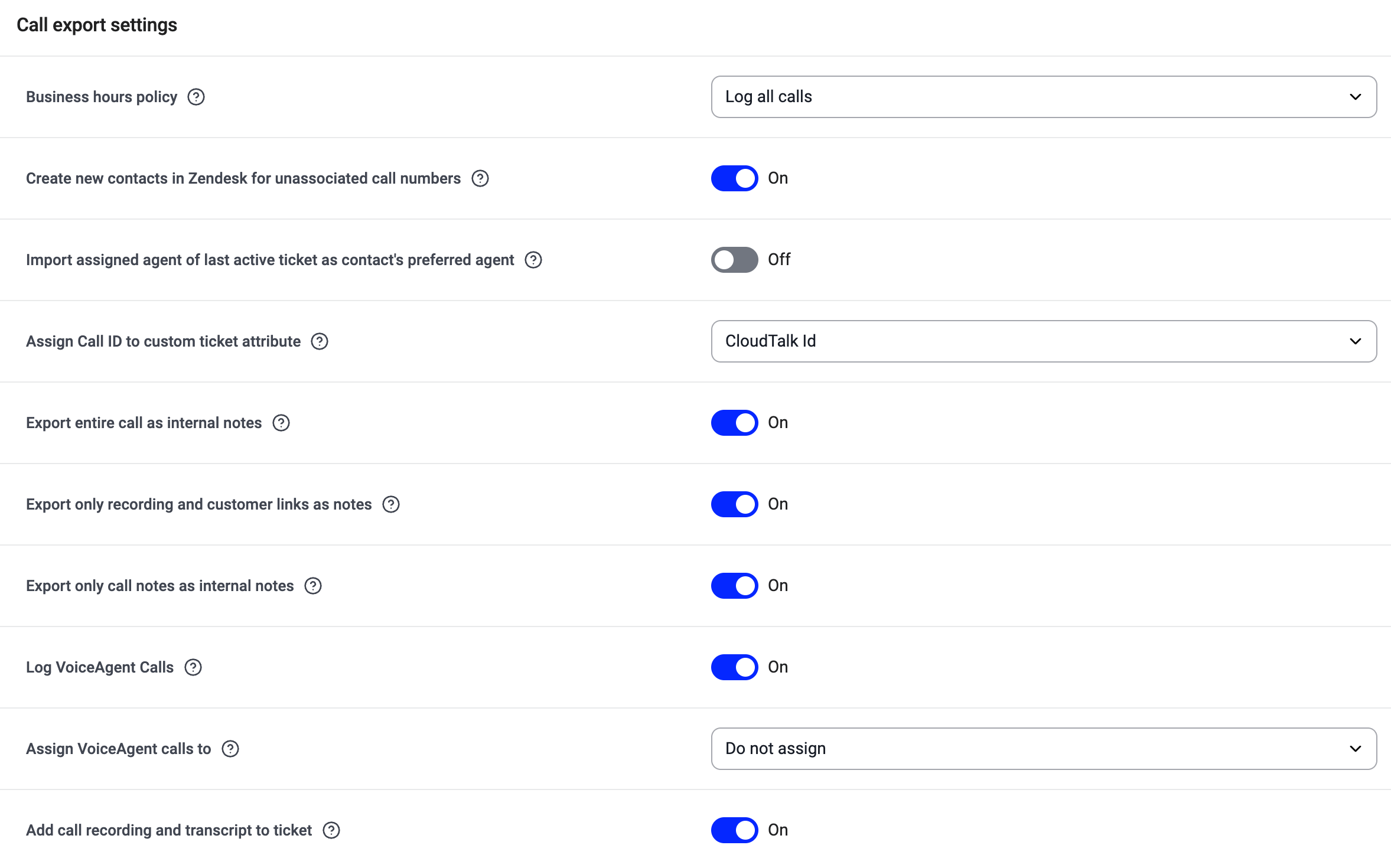
-
Choose when calls should be logged based on your Business hours policy.
You can select how CloudTalk should handle calls in relation to your configured business hours. For example, if you choose Log all calls, every call will be exported regardless of time. -
Create new contacts in Zendesk for unassociated call numbers.
When enabled, CloudTalk will automatically create a new Zendesk contact if a call is made to or received from a number that does not exist in Zendesk. -
Import assigned agent of last active ticket as contact’s preferred agent.
When enabled, CloudTalk will assign the Zendesk agent from the most recent active ticket as the preferred agent for that contact in CloudTalk. -
Choose how call data is exported as internal notes.
You can enable one or more of the following options:
-
Export entire call as internal notes
When enabled, all call details (notes, metadata, links, and recordings) are added as internal comments in Zendesk. -
Export only recording and customer links as notes
When enabled, only the call recording and CloudTalk contact link are exported as internal notes. -
Export only call notes as internal notes
When enabled, only the agent’s call notes are exported as internal comments. Internal notes are not visible to customers.
-
Export entire call as internal notes
-
Enable VoiceAgent call logging.
When enabled, VoiceAgent calls are exported to Zendesk and labeled accordingly. You can also choose how VoiceAgent tickets are assigned using the Assign VoiceAgent calls to dropdown. -
Add call recording and transcript to ticket.
When enabled, CloudTalk uploads the call recording and transcript to the Zendesk ticket as a voice comment. Important: Whether a recording or transcript is exported depends on your Call Export Workflow Settings.
If a call type is configured not to be logged (for example, outbound unanswered), its recording and transcript will not be exported.
Advanced Call Export Rules
You can configure export behavior separately for each call type. Each tab allows you to define how that specific call type is logged in Zendesk. Call types include inbound answered calls, outbound answered calls, missed calls, and voicemail.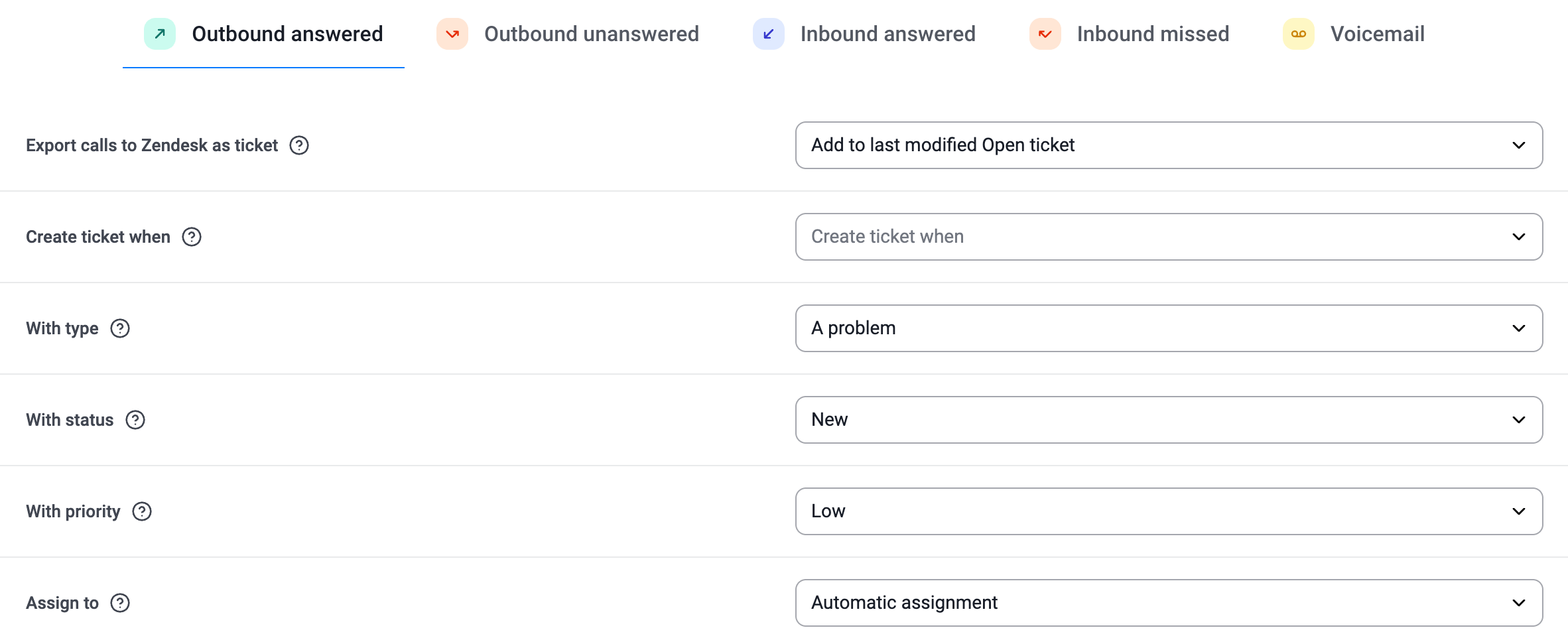
Per Call Type Settings
Export Behavior
Choose Strategy for logging calls to tickets. This setting lets you decide how CloudTalk should log calls into Zendesk tickets. You can choose from three options:- Create new ticket: A new Zendesk ticket will be created for every new call made or received in CloudTalk.
- Add to last modified Open ticket: The call will be added as an internal note on the most recently updated Open ticket associated with the contact. (Ticket fields and status are not changed directly, but Zendesk automations may trigger other updates.)
- Do nothing: Calls will not be logged into Zendesk tickets.
If Add to last modified Open ticket is selected and no open ticket exists, CloudTalk automatically creates a new ticket using the configured type, status, priority, and assignment settings.When logging to an existing ticket, the type, status, priority, and assignment settings do not apply.
Ticket Creation Timing
Select whether CloudTalk should create a Zendesk ticket when the call is answered or when the call ends. You can choose between two options:- Answered: A Zendesk ticket is created immediately when the call is picked up. When the call ends, CloudTalk adds a second internal note that includes call notes and tags.
- Ended: A Zendesk ticket is created only after the call finishes, containing all call details in a single note. If an agent later edits call tags or notes in CloudTalk > Call History > Call Details while the Zendesk ticket is still open, CloudTalk automatically adds a new internal note with the updated information.
Ticket Properties (Applied When Creating a New Ticket)
These settings apply only when a new ticket is created.- With type: Select the Zendesk ticket type (e.g., Problem, Incident, Task).
- With status: Select the Zendesk ticket status (e.g., New, Open, Pending, Solved).
- With priority: Select the Zendesk ticket priority (Low, Normal, High, Urgent).
Assignment Rules
Use the Assign to setting to control how tickets created for this call type are assigned in Zendesk. You can choose from the following options:- Automatic assignment The ticket is assigned to the Zendesk user whose email address matches the CloudTalk agent who handled the call. The Zendesk group is assigned automatically based on the group the agent belongs to at the time of call export.
- Assign to user All tickets created for this call type are assigned to a specific Zendesk user that you select.
- Assign to group All tickets created for this call type are assigned to a specific Zendesk group that you select.
-
Do not assign
Tickets created for this call type are left completely unassigned in Zendesk, with no assignee and no group set. Unlike Automatic assignment, which matches the ticket to a Zendesk user by email, this option guarantees the ticket stays unassigned. This is useful if your own Zendesk triggers or routing rules handle assignment.
Connected Numbers (for Calls)

- Only calls made or received through the selected numbers will be exported to Zendesk.
- Calls from other CloudTalk numbers will not be logged.
Number Overrides (for Calls)
Use Number Overrides to apply different call export rules to specific CloudTalk numbers.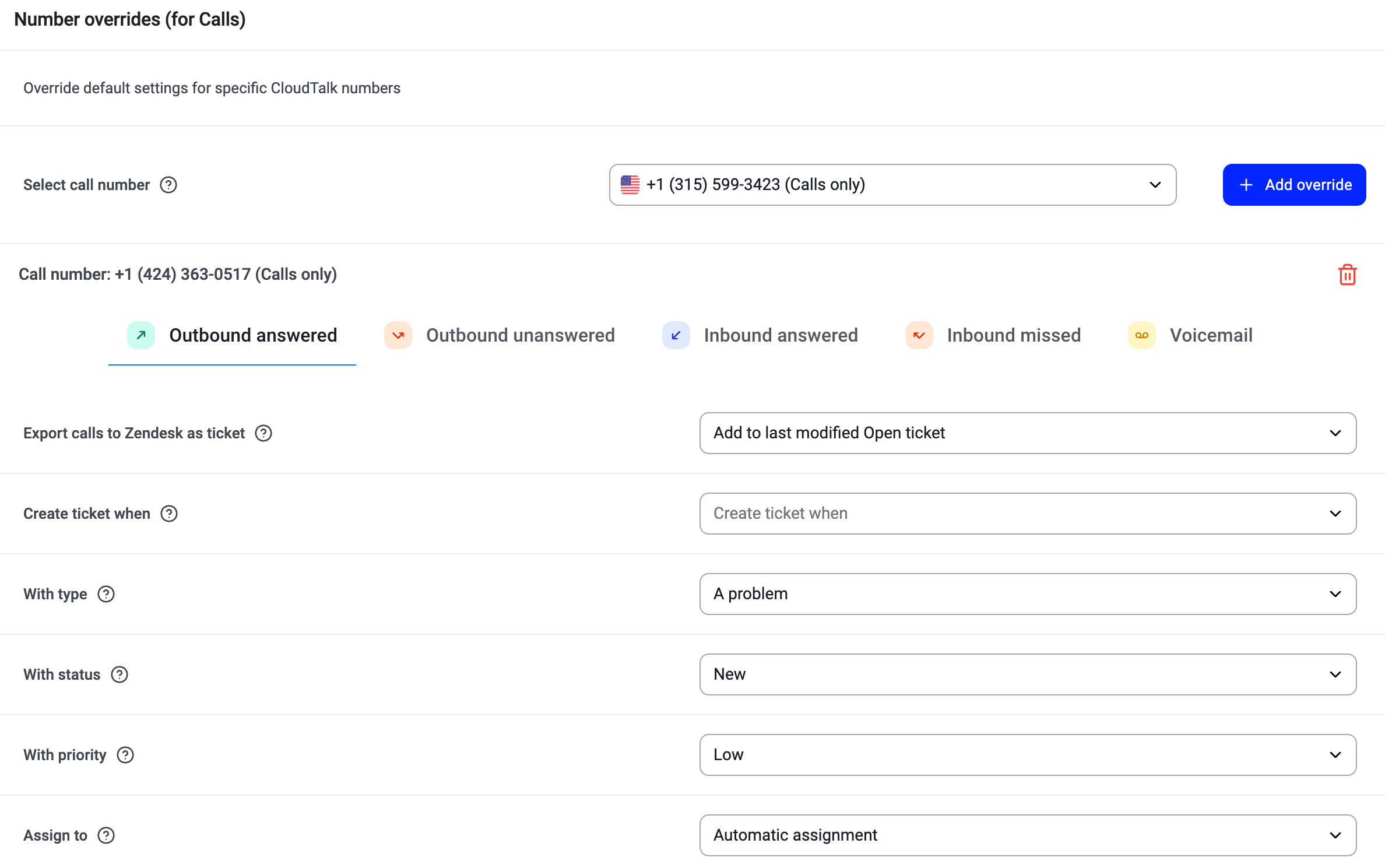
Workflow Settings for SMS
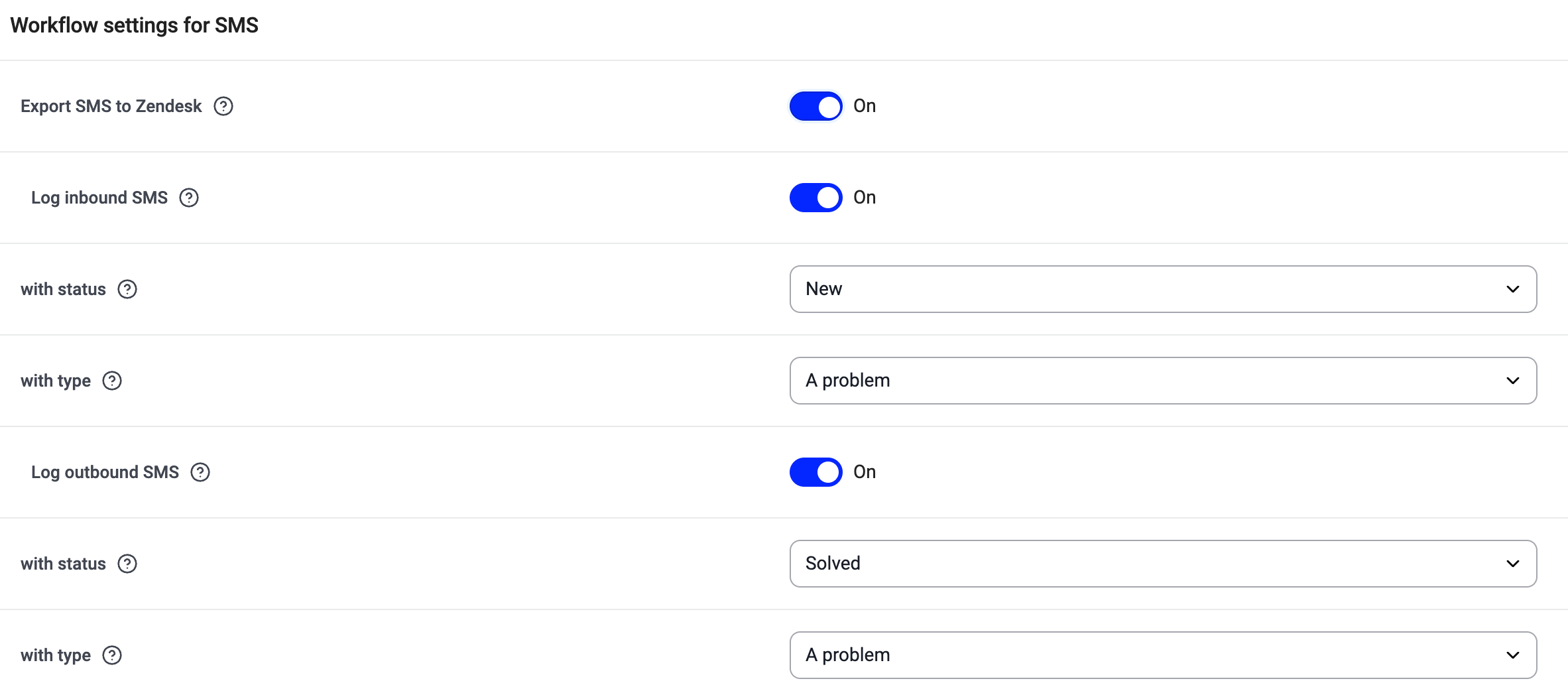
- Export SMS to Zendesk enables or disables SMS synchronization.
- Log inbound SMS creates a Zendesk ticket for incoming messages, using the selected ticket status and type.
- Log outbound SMS creates or updates a Zendesk ticket for outgoing messages, using the selected ticket status and type.
Custom Field Mapping
Admins can map CloudTalk call data to custom Zendesk ticket fields. This allows call details to be automatically stored in structured fields, making them available for reporting in Zendesk Explore. This mapping is triggered when a call ends.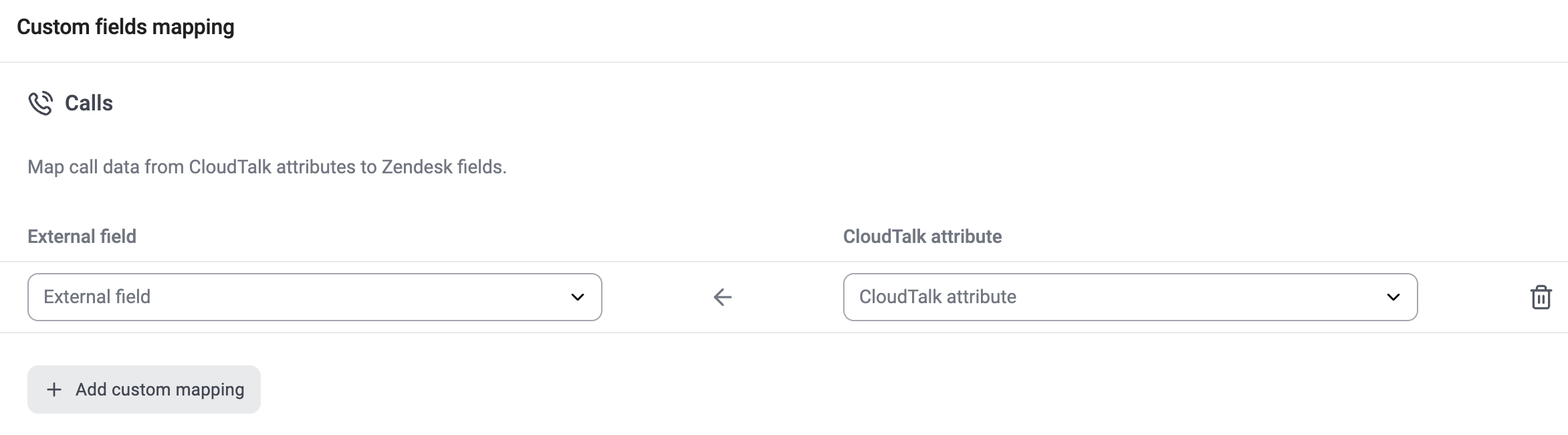
To learn how to configure custom field mapping, see Configure Custom Field Mapping for Zendesk.
Install CloudTalk CTI
Our Zendesk CTI supports both inbound and outbound use cases. SMS messaging is also available through the Messages section of the CTI.
Steps from Zendesk
-
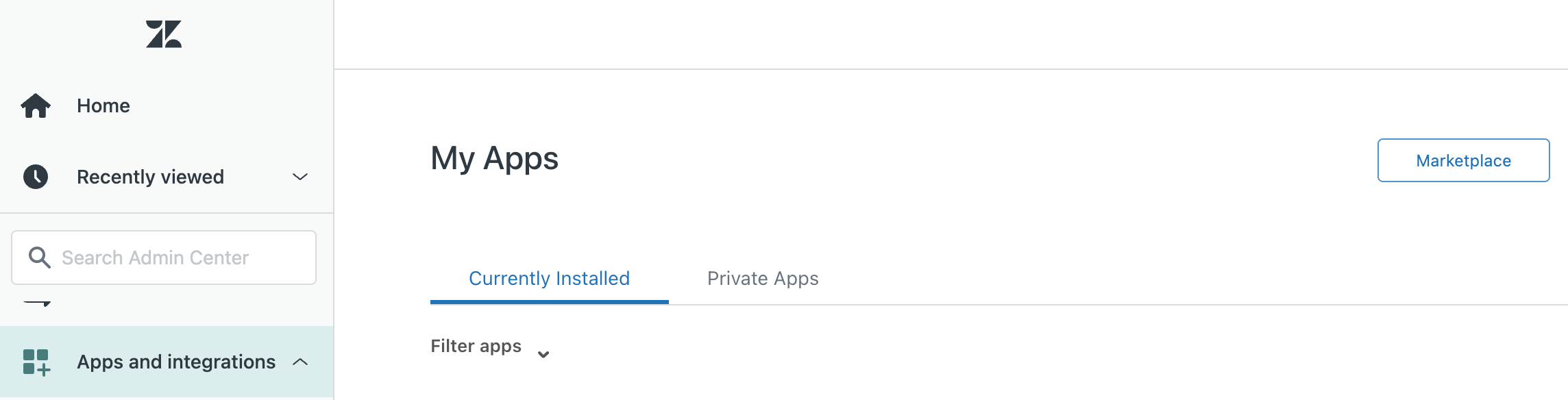
Navigate to the Zendesk marketplace and search for CloudTalk.
-
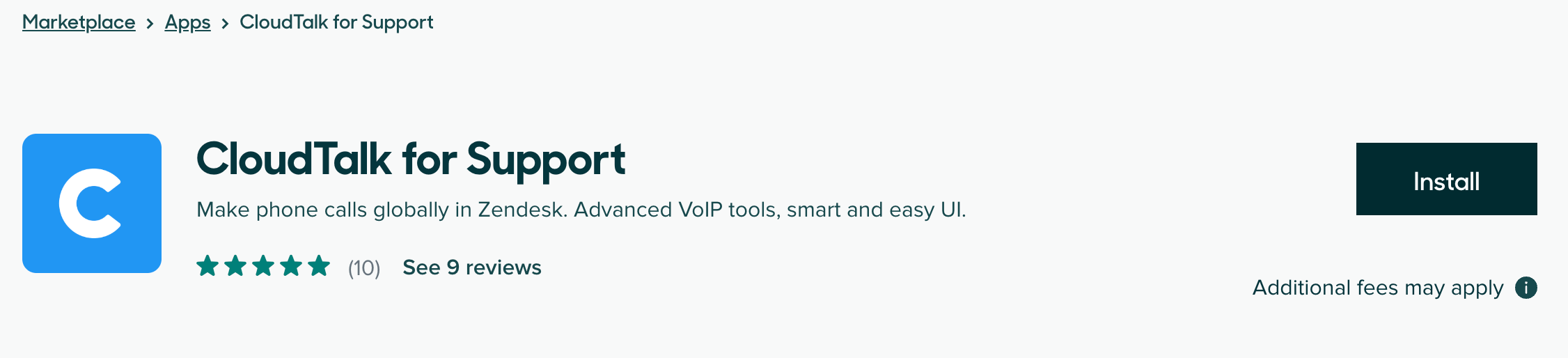
Select the CloudTalk for Support app. Install.
-
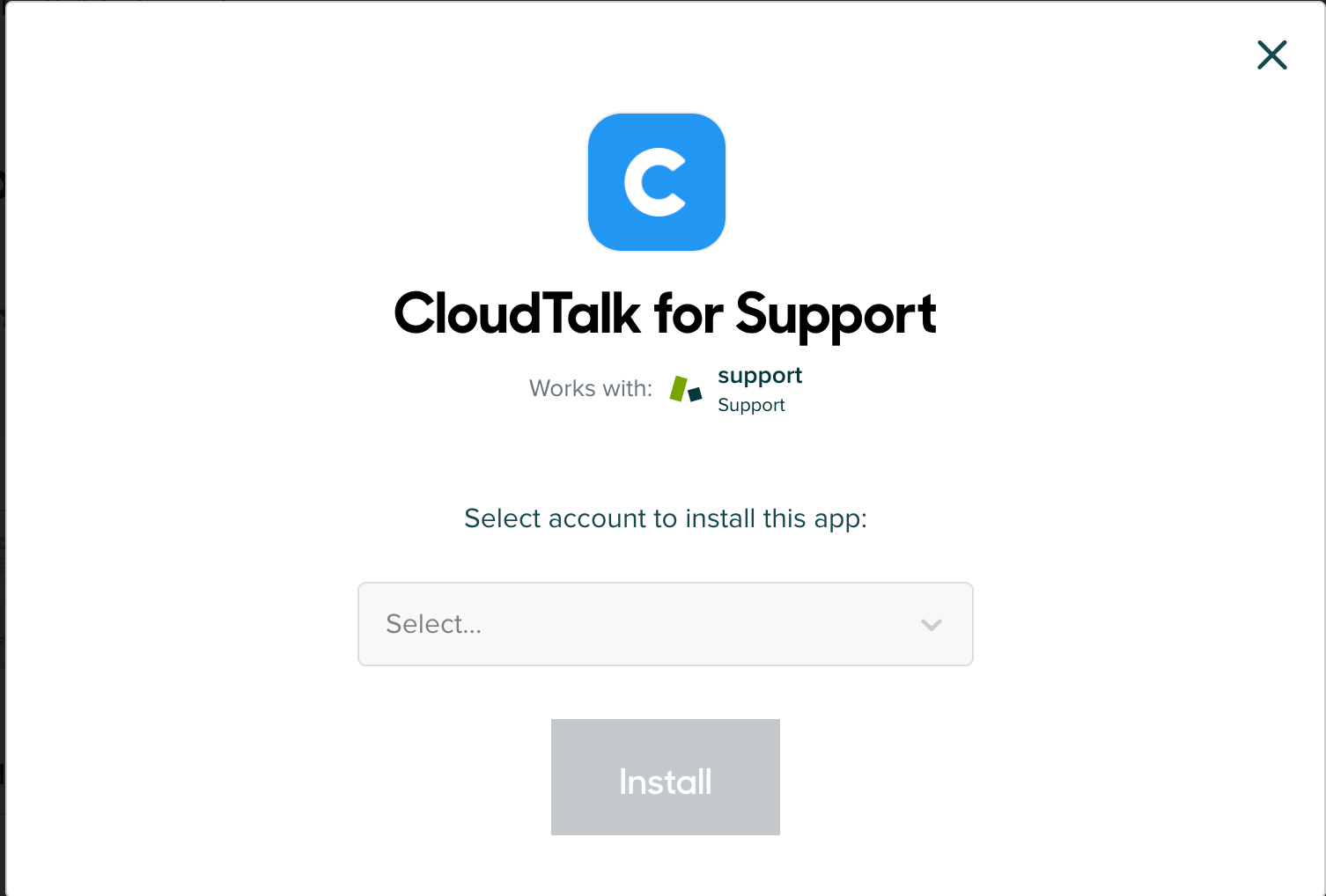
Select which Zendesk account you would like to install the app to and select Install. (If relevant, make sure this is the same account for which you set up your data integration.)
-
Optional: Choose whether to enforce security restrictions on your integration by assigning groups or user roles that can access this integration instance. Select Update to finalize.
-
You can update these settings anytime from your Zendesk admin portal:
{yourZendeskDomainName}.zendesk.com/admin/apps-integrations/apps/support-apps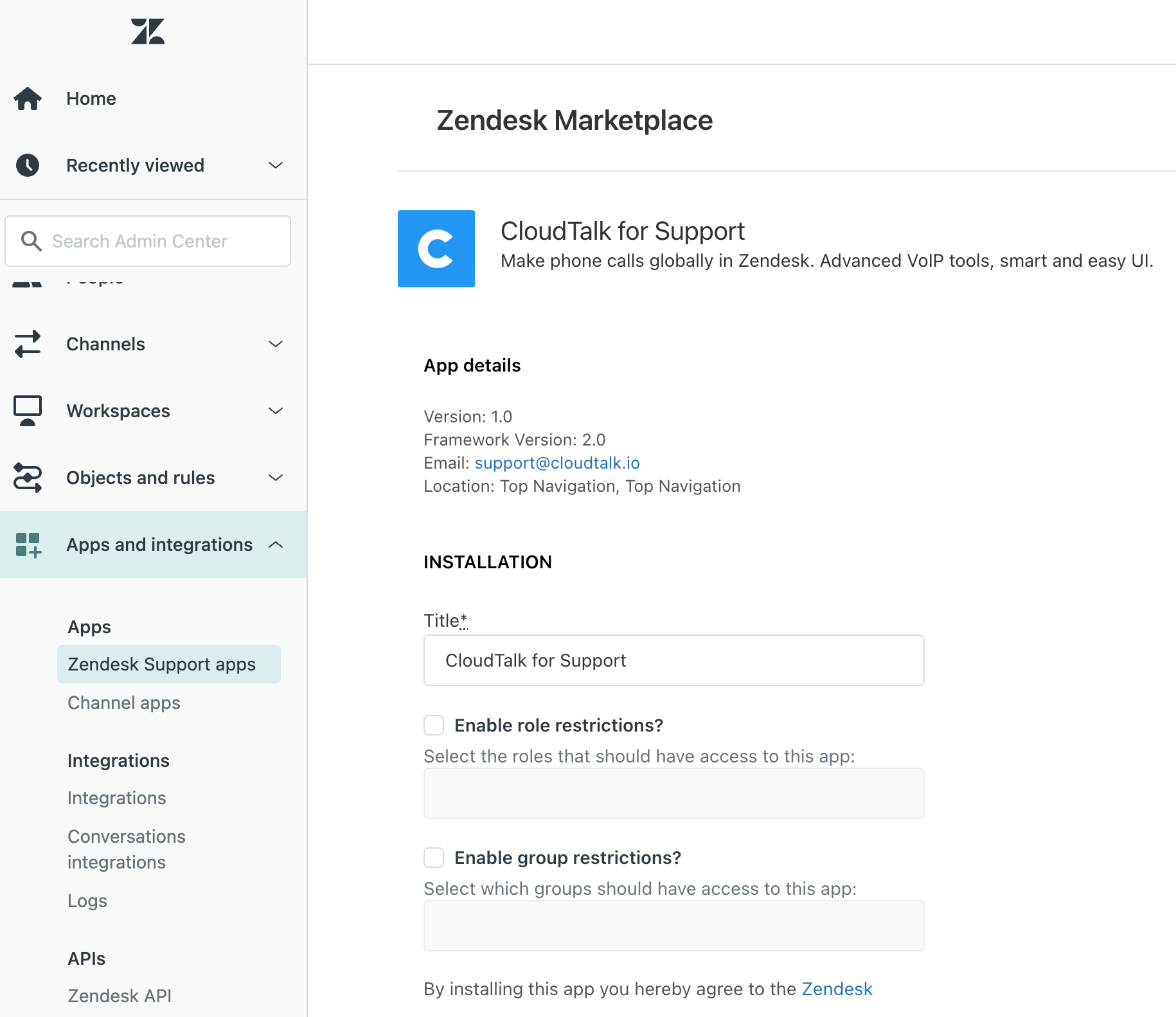
-
You can update these settings anytime from your Zendesk admin portal:
-
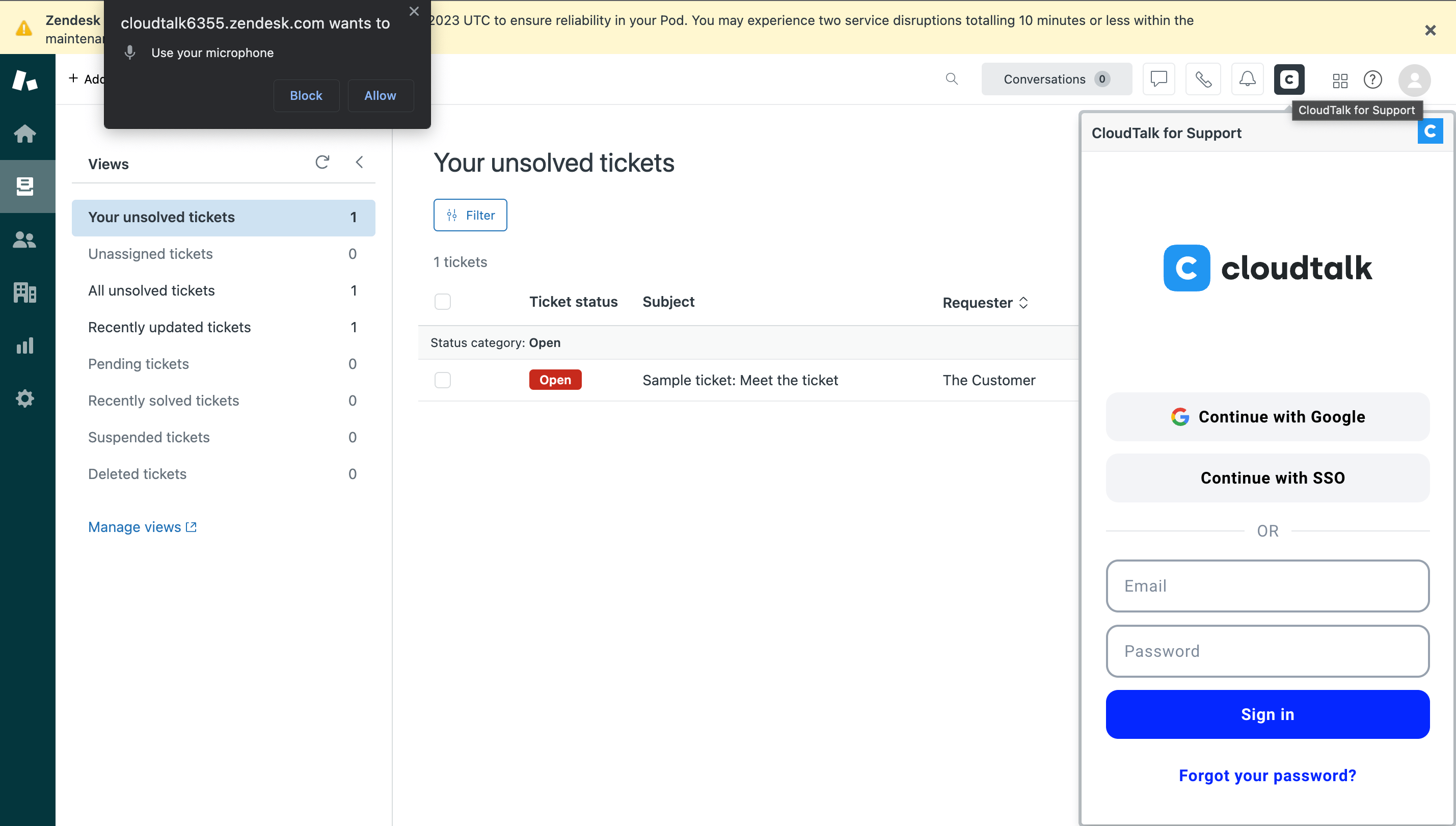
Once the CloudTalk for Support app is installed, you will see the CloudTalk logo in the toolbar. Select this logo to log into your CloudTalk Phone if it is your first use, or if you were previously logged in somewhere else.
- You may need to allow microphone permissions on your browser.
-
During the initial setup, you can select the options for how you want your CloudTalk Phone to behave within Zendesk.
-
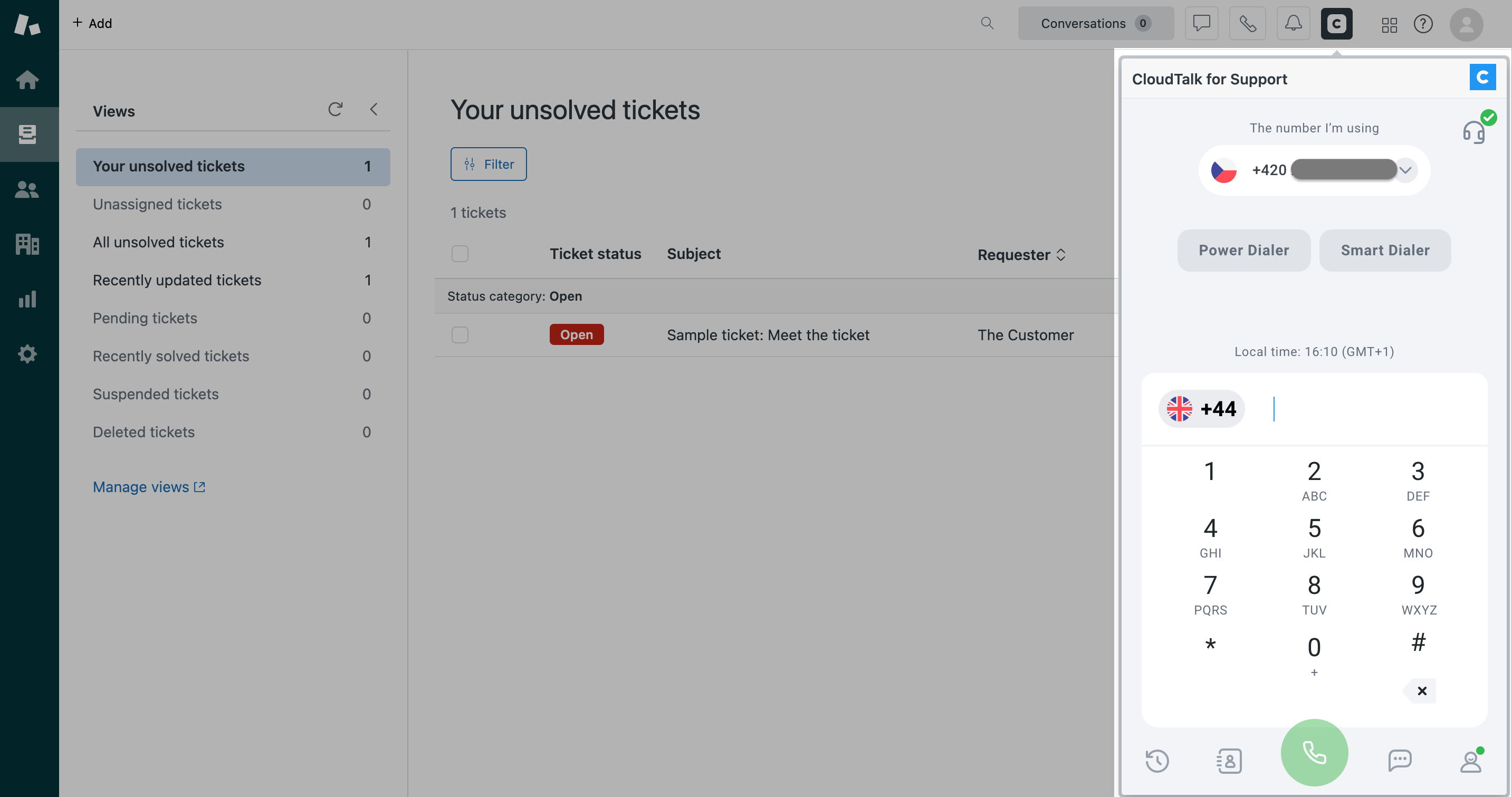
When signed in, your CloudTalk Phone is ready to use within Zendesk.
Disconnect or Remove the Integration
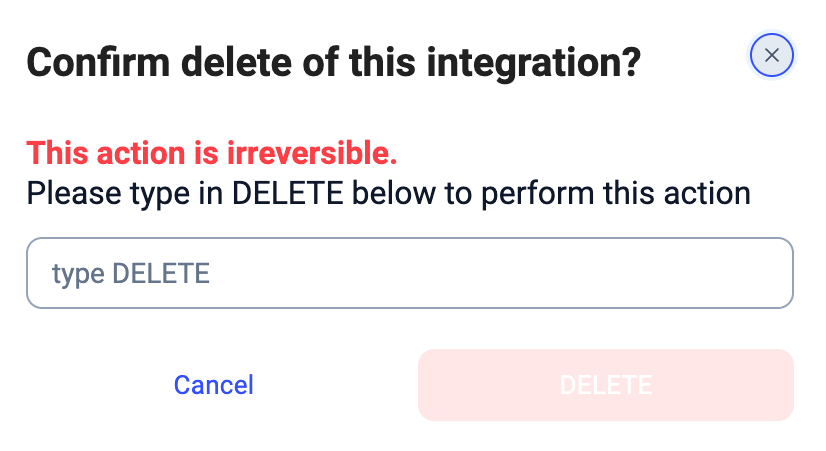
If you no longer want CloudTalk to synchronize data with Zendesk, you can disable or permanently remove the integration. To disable the integration, go to Settings > Integrations, locate the Zendesk integration, and toggle the status from Active to Inactive.
Need help or have a question? Just reach out through our Support portal — we’re here for you.